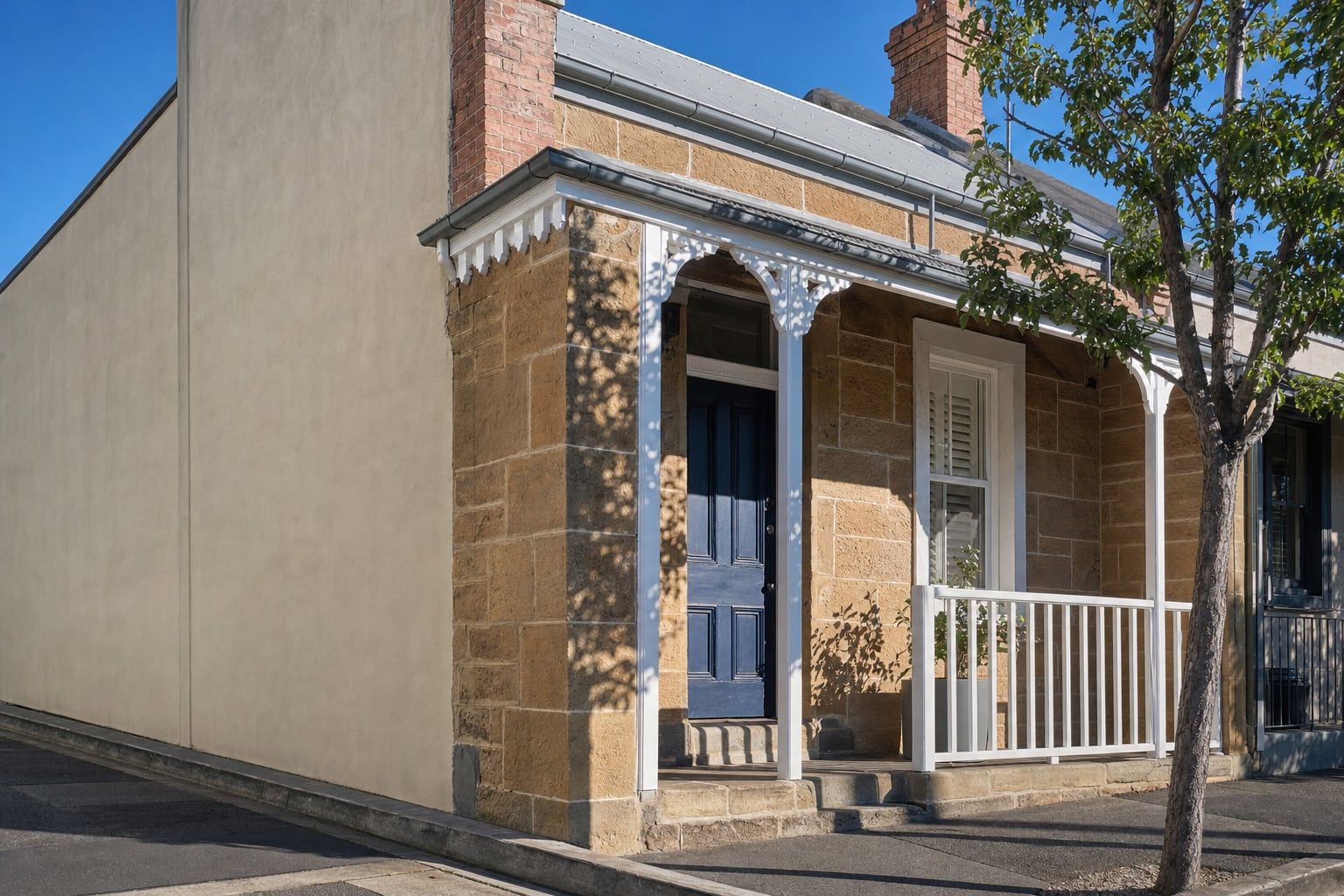
Chemical Damp Course Inner West
A new barrier in the mortar line, put in from inside or out without rebuilding the wall.
How a chemical damp course works
A chemical damp-proof course is a water-repellent cream injected into one mortar joint along the bottom of a wall. The cream soaks into the mortar and the brick around it, then cures into a band that water cannot climb through. Because mortar runs continuously along a brick wall, the band joins up from one hole to the next and forms a new barrier above the failed original.
It is the most common treatment for brick houses in the Inner West because it is quick, it does not involve taking the wall apart, and it can be done room by room. On a typical semi or cottage in Leichhardt, Petersham or Dulwich Hill, the drilling is done in a day.
Getting the height right
The new line has to sit above the ground outside and at or below the floor inside. On a lot of older houses those two levels have drifted. Paths have been relaid higher, courtyards concreted over, and garden beds piled against the wall. If the ground outside sits above the new line, water simply goes around it. We measure both sides before choosing the joint, and if the outside ground is too high, the quote includes lowering it or adding drainage. Where that can’t be done, waterproof tanking protects the section below.
When injection is the right choice
Injection suits:
- solid and double brick walls with a clear, continuous mortar bed
- internal brick walls that share the same footing as the outer walls
- walls where the face brick outside has to stay untouched
- rooms that need to be back in use quickly
It is not the right choice for every wall. Rubble sandstone, very soft early bricks and walls with large voids do not hold the cream evenly, and a gap in the line means the damp keeps coming. For those walls we recommend a physical damp course instead, and the quote explains why.
The plaster still matters
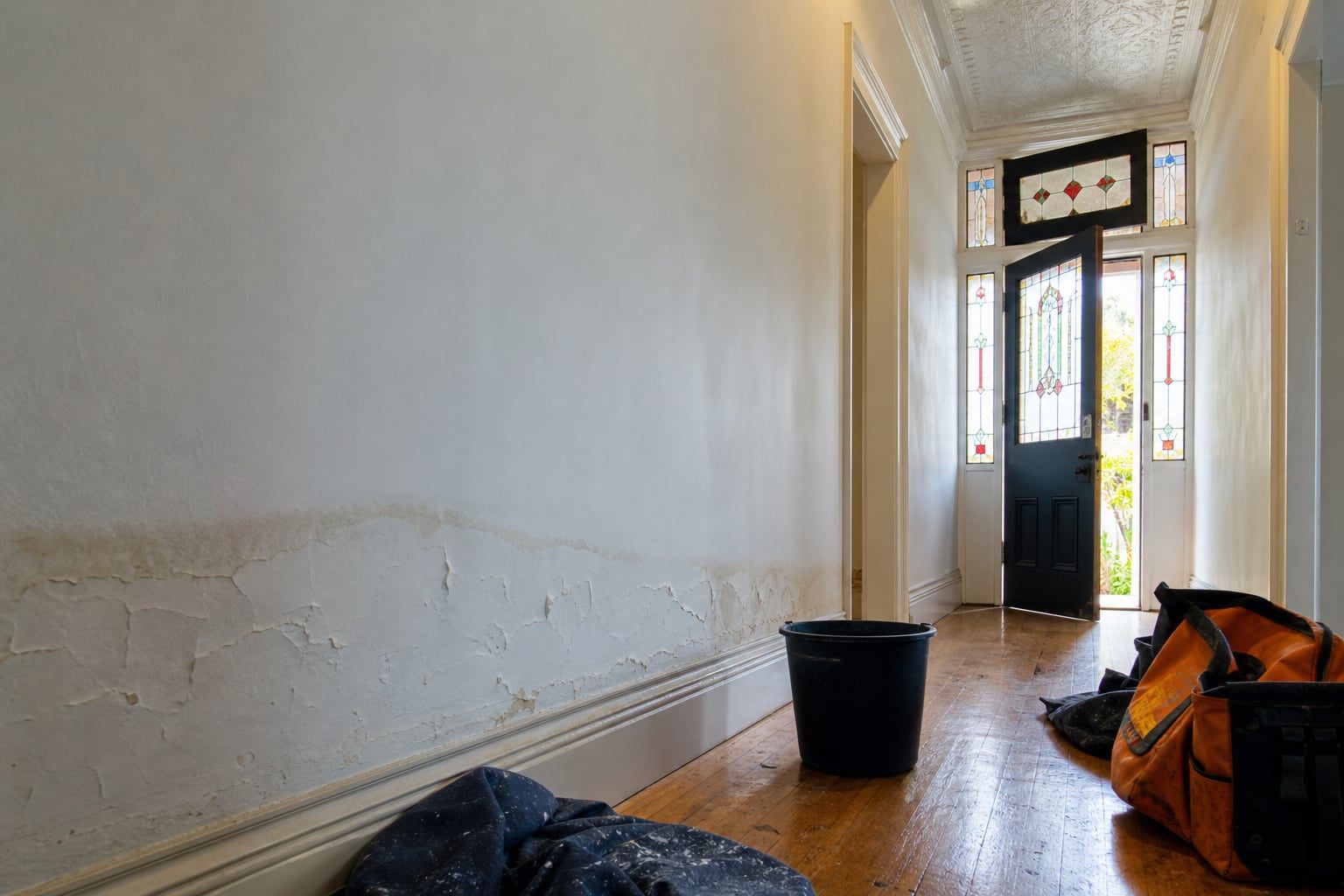
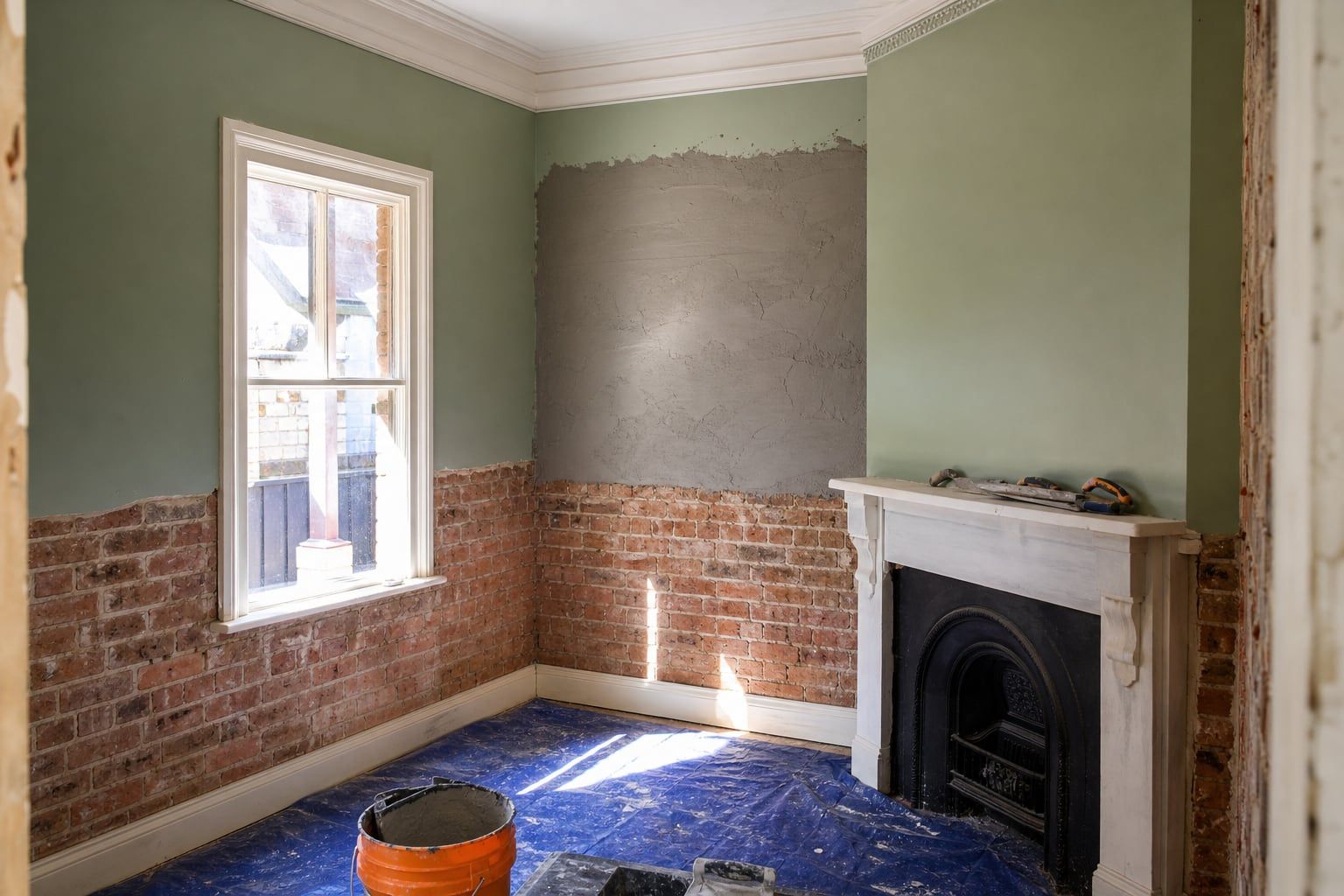
Injecting the wall stops more water rising, but the plaster above has spent years soaking up salt. Left in place, it keeps pulling moisture from the air and the paint keeps failing. That is why the injection and the salt-damaged plaster repair are quoted together. The old plaster comes off to a line well above the worst readings, and a salt-resistant render goes on after the wall has had time to dry.
Holes, dust and finishes
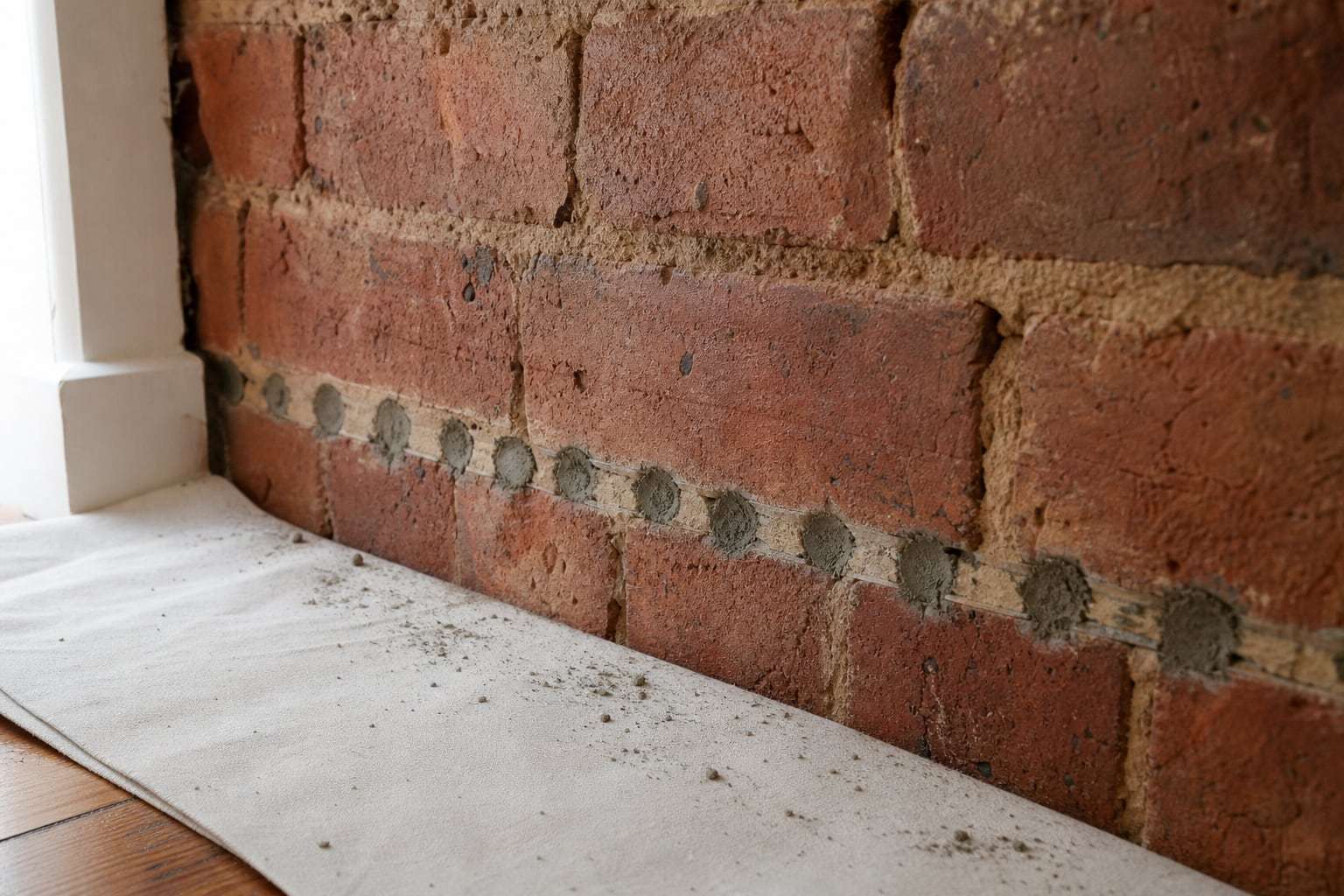
The holes are drilled into the mortar, not the brick face, and filled with a mortar mixed to match. Inside, they sit behind the new render and skirting, so they disappear. Dust is managed with sheets and vacuum extraction while drilling, and the floor is covered throughout.
Is it really rising damp?
Before any injection, we confirm the damp is coming from the ground. Walls that are wettest higher up, or only after rain, often have another cause. Our guide to damp walls after rain covers the leaks and splash-back problems that look like rising damp but need a different fix. For the full picture of how we approach a job, see our page on rising damp treatment.
How long it lasts
A properly installed injected course is a long-term fix. What shortens its life is the ground outside creeping up again, so keep garden beds and new paving below the line.
Updated
What good chemical damp course looks like
Chemical Damp Course across the Inner West
Chemical Damp Course in the Inner West: step by step
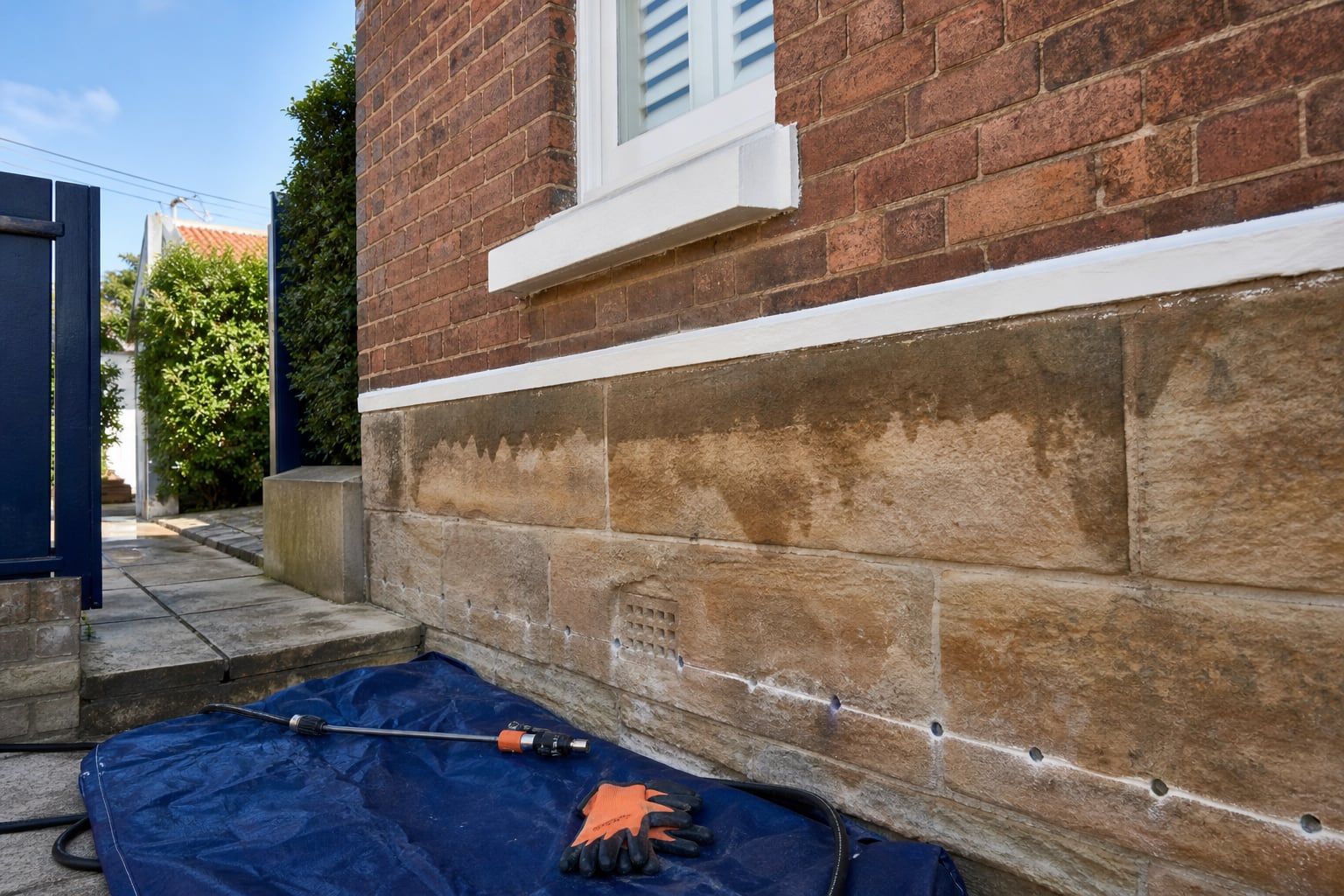
- Pick the jointWe choose a continuous mortar joint above the ground outside and as close to floor level as practical.
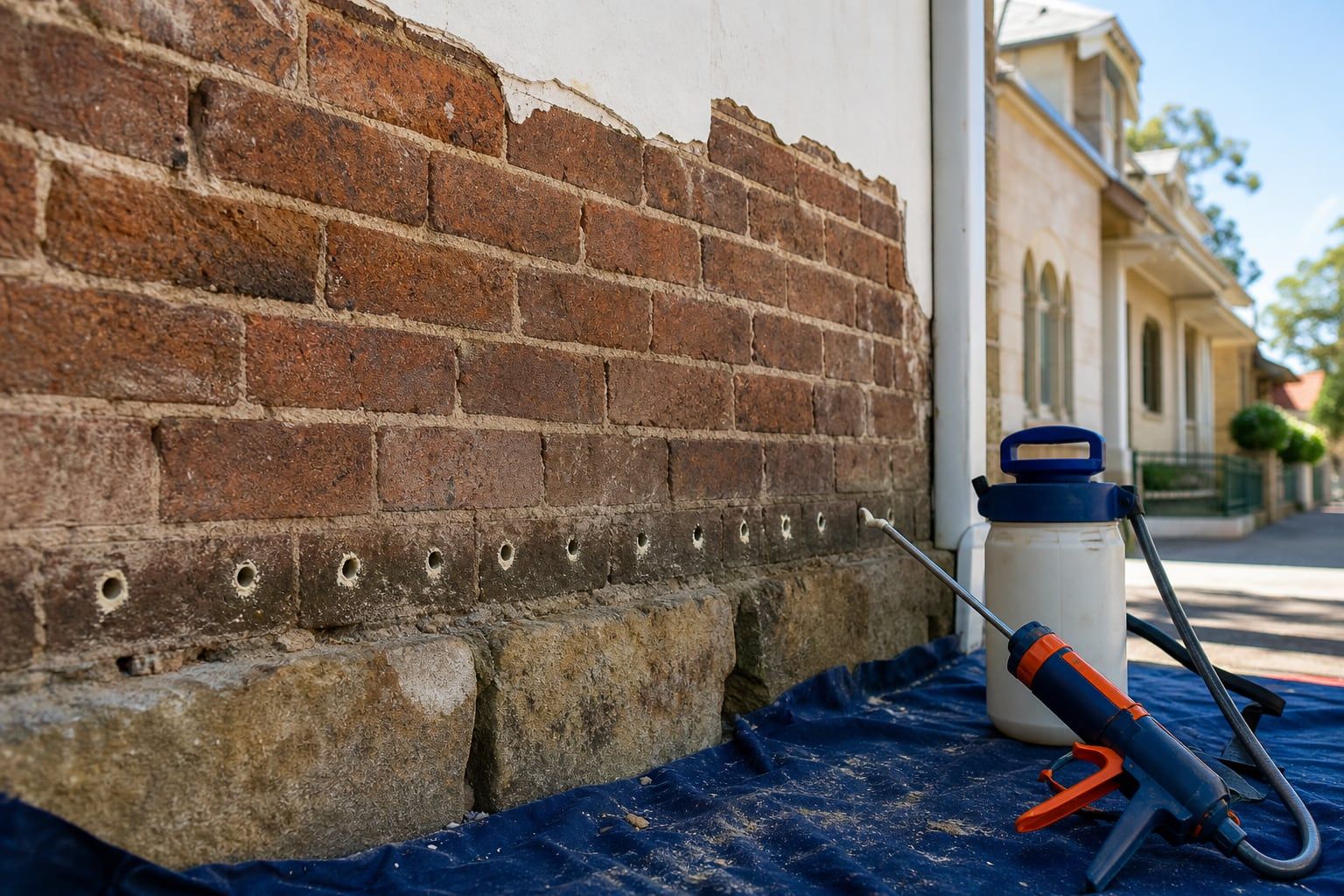
- Drill to depthHoles go into the joint at a set spacing, drilled to the depth the wall's thickness calls for.
- InjectThe cream is pumped into each hole and spreads through the mortar to join into one continuous line.
- Fill and finishHoles are pointed with a matched mortar, and the inside is prepared for new render.
Chemical Damp Course guides for Inner West homeowners
Chemical Damp Course questions in the Inner West
Something else on your mind? Call 0400 000 004 and ask.
Do you inject from inside or outside?
Either, depending on access, finishes and wall thickness. Face brick outside is often drilled from inside so the holes end up behind new render. Thick walls may need both sides.
Is the cream safe inside a lived-in home?
The creams we use are water-based and low-odour. Rooms can usually be used the same evening once the dust is cleaned up.
Will injection work on my sandstone wall?
Sometimes. Coursed sandstone with a good mortar bed can take injection. Rubble stone with irregular joints often cannot hold a continuous line, and a physical course or drainage is the better choice.