Waterproof Tanking and Drainage Inner West
Keep water off the wall where a damp course alone can't, from regraded paths to tanked walls below ground.
When water comes in from the side
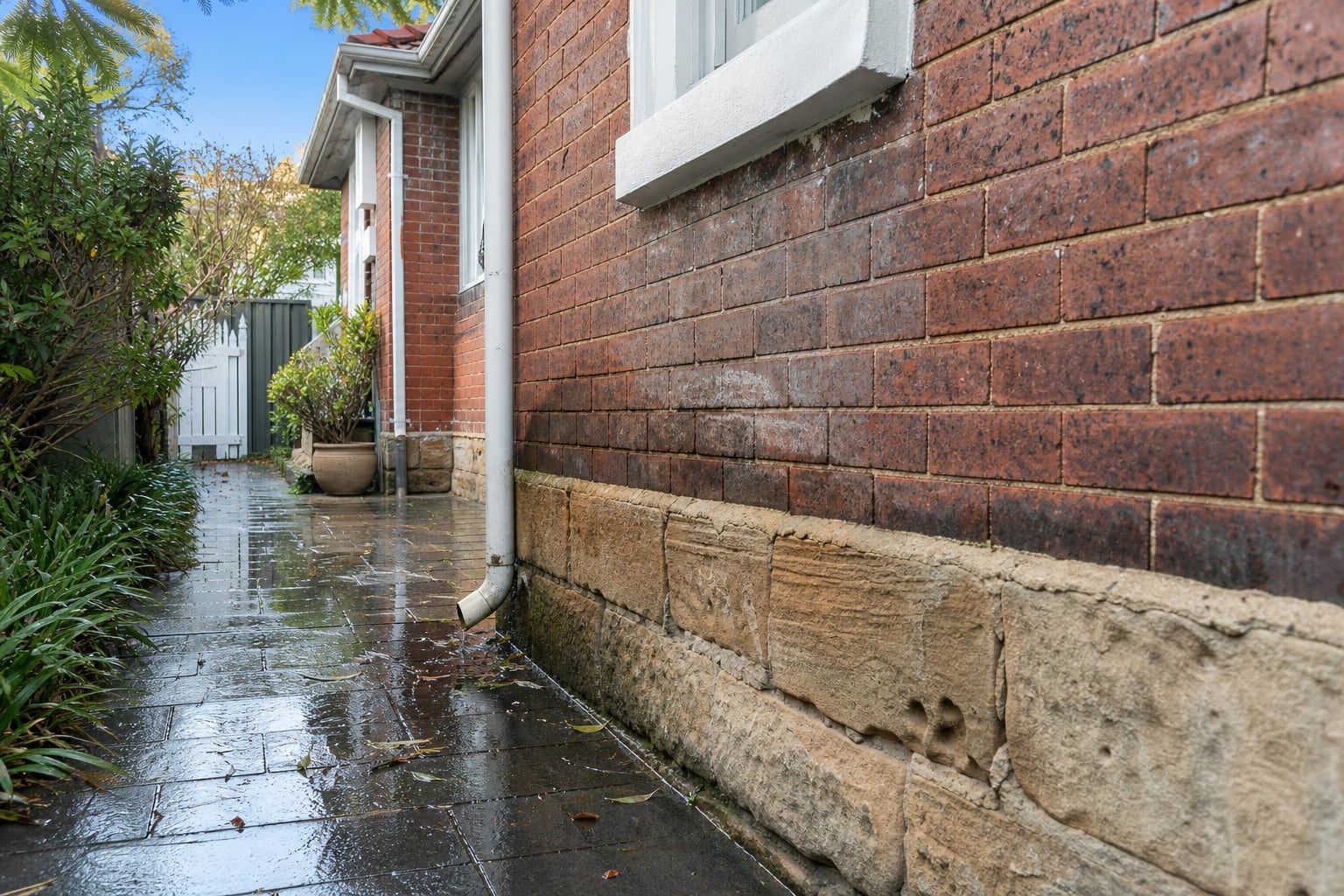
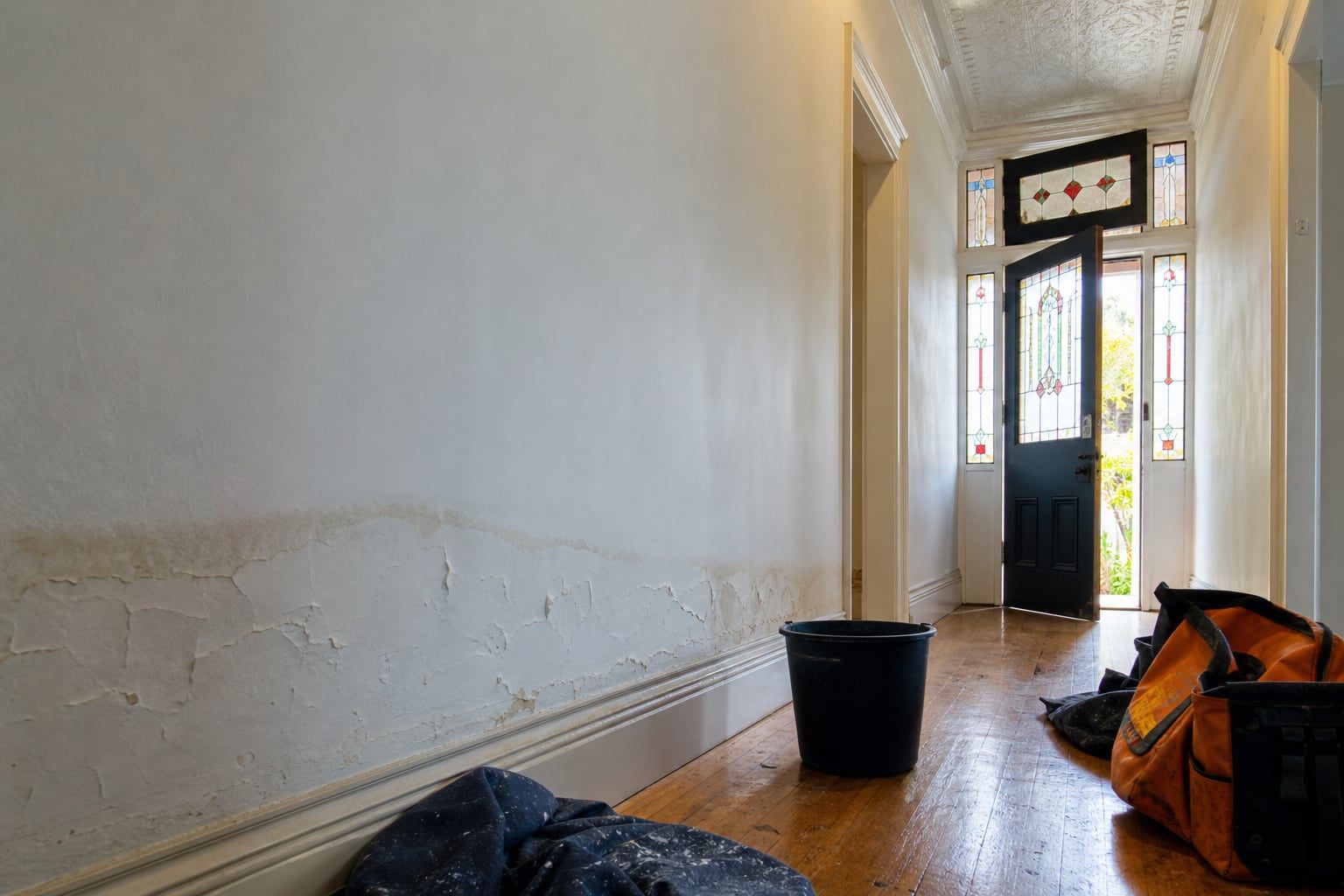
A damp-proof course stops water rising up through a wall from below. It does nothing for water pushing sideways through a wall from soil, paving or a garden bed that sits higher on the outside. In the Inner West that is common. Back courtyards have been concreted up to the level of the back door. Side paths between houses have been relaid over the years, each time a little higher. Rear rooms were cut into sloping blocks, and houses in streets near the old creek lines sit on ground that stays wet after rain.
In these spots, the fix is to keep water off the wall, or to waterproof the wall where the ground has to stay.
Drainage first
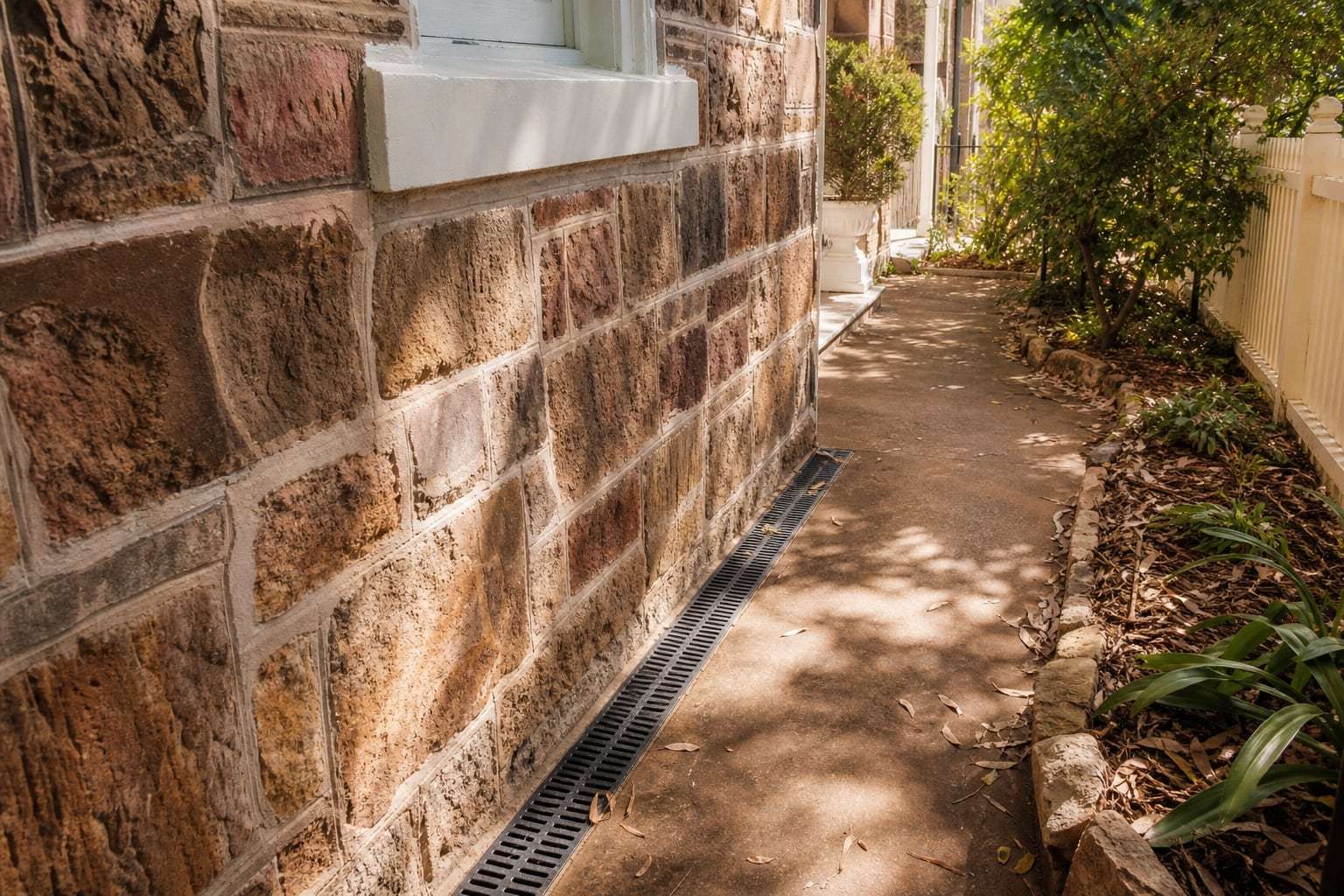
The best fix is usually outside. We look at where rain lands and where it ends up, then:
- lower paths and garden beds that have been built up against the wall
- regrade paving so it falls away from the house
- add a slotted drain along the base of the wall where paths can’t be lowered
- move downpipes that empty against the brickwork
- clear or relay drains that back up against the house
Once the ground beside the wall is below the floor and the damp-proof course, the wall can be treated like any other.
Waterproof tanking where the ground stays
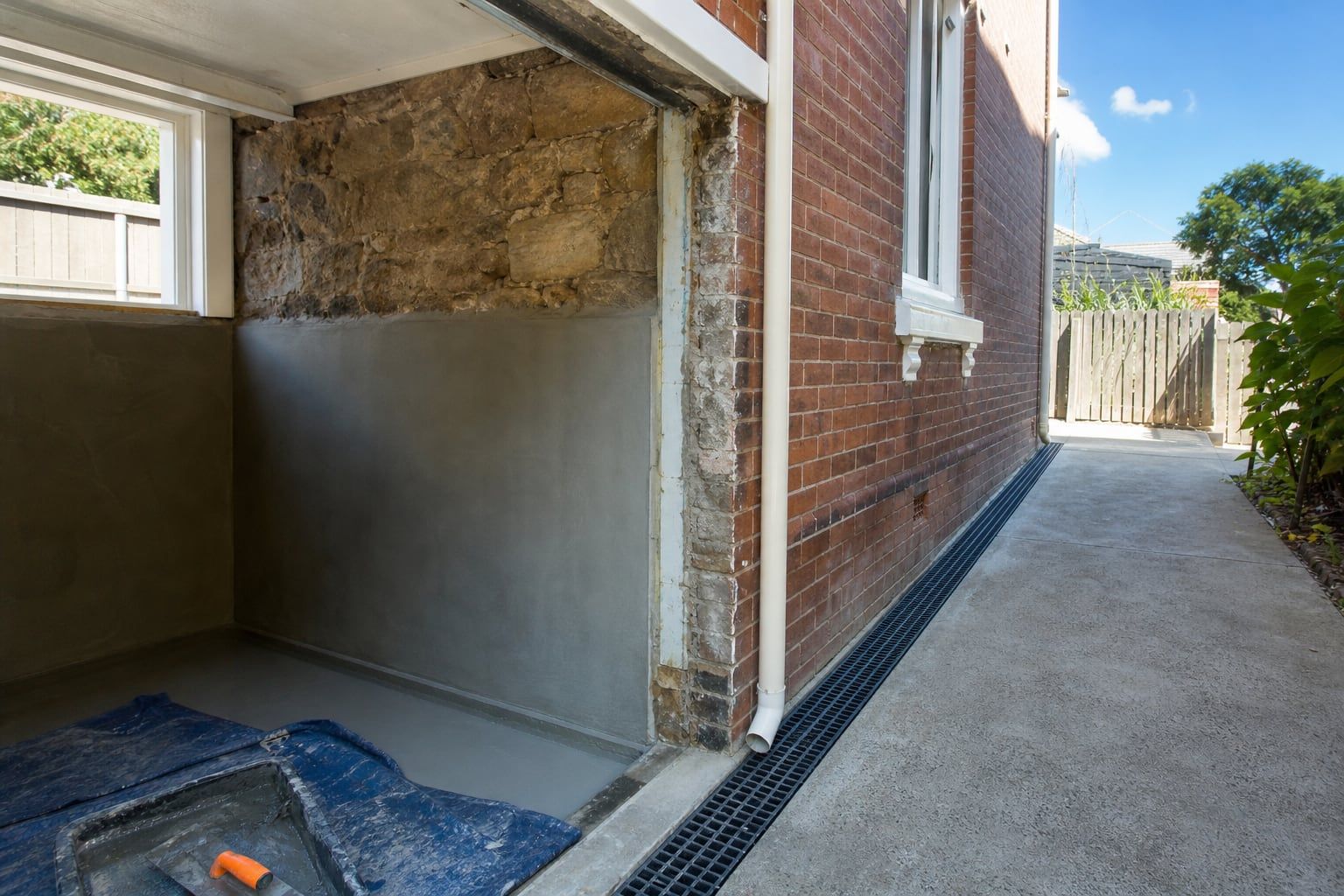
Some walls have to stay below ground: rear rooms set into a slope, a cellar, or a retaining wall forming the back of a laundry. For these, waterproof tanking is applied to the inside face of the wall. It is a cementitious or membrane system that holds back water pushing through from the soil side. It is finished with a render and can be painted.
Tanking only works on the section of wall it covers, so it is joined to a chemical damp course or physical damp course on the walls above and beside it. That way there is no gap for water to find.
Under the floor too
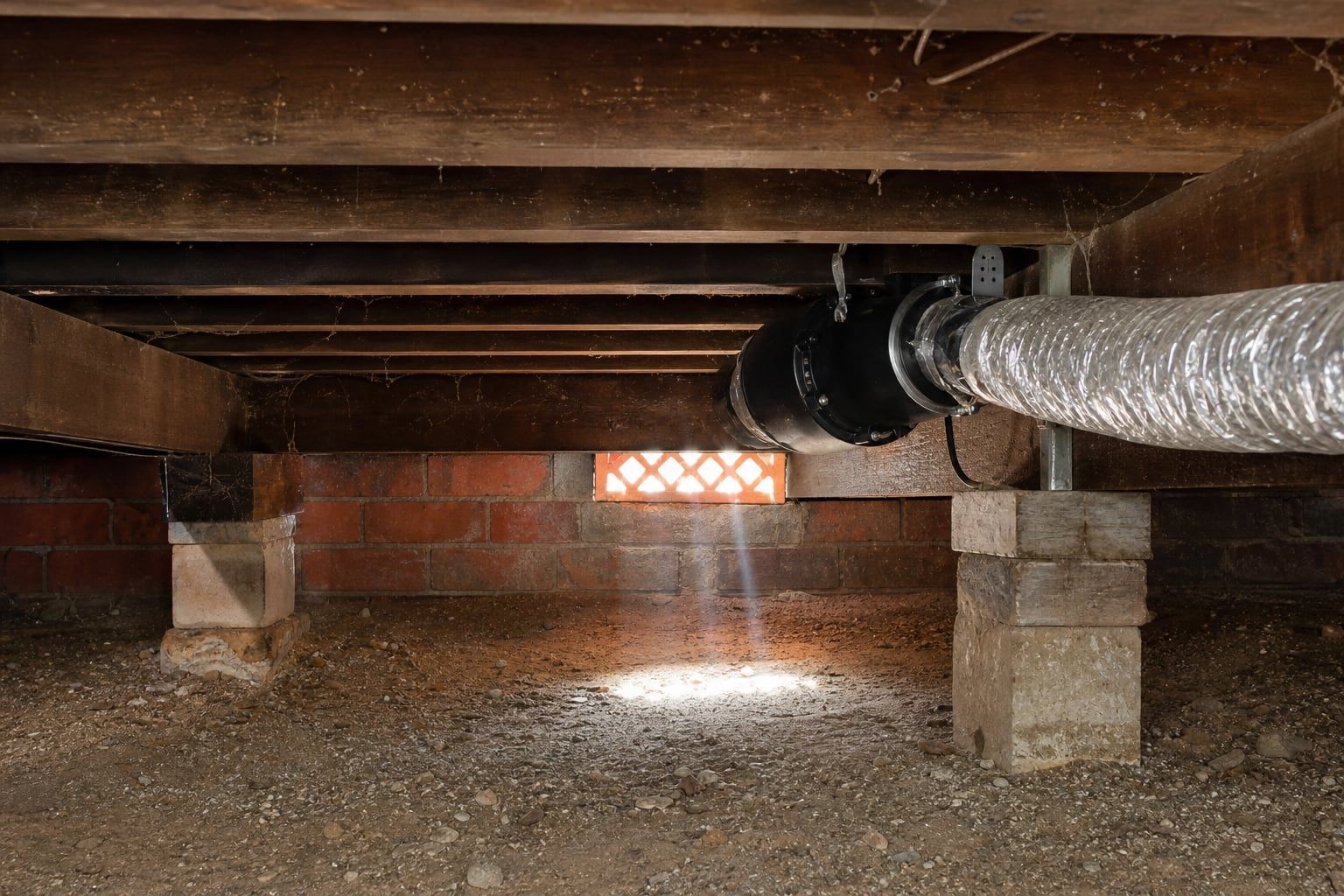
Water running towards the house often ends up under it. If the subfloor is wet after rain, drainage outside is the first step, and subfloor ventilation helps it dry once the water has stopped coming in.
Is it rising damp at all?
Water that comes through after rain can look like rising damp on the inside. Our guide on damp walls after rain explains how to tell the two apart. For the full approach we take to a damp house, see our rising damp treatment page.
Every drainage and tanking job starts with the same free moisture check, so you know what is causing the water before you spend anything.
Working with neighbours
On terraces and semis, the water against your wall sometimes comes from next door: a shared side path, a neighbour’s downpipe or a courtyard laid against the party wall. We note where the water is coming from, so you have the facts if a conversation with the neighbour or a shared repair is needed. Where the fix is on your side, it is in your quote.
Updated
What good waterproof tanking and drainage looks like
Waterproof Tanking and Drainage across the Inner West
Waterproof Tanking and Drainage in the Inner West: step by step
- Trace the waterWe look at where rain lands, where it runs, and where it ends up against the house.
- Lower or drainPaths and beds are lowered, regraded or fitted with drains so water runs away from the walls.
- Tank below groundWalls that must stay below ground get a waterproof tanking system on the inside face.
- Make goodThe wall is finished with a suitable render, and outside surfaces are reinstated.
Waterproof Tanking and Drainage guides for Inner West homeowners
- Damp walls after rain: when wet walls aren't rising dampThe leaks, splashback and drainage problems that make walls wet after rain, how they differ from rising damp, and how each is fixed.
- Rising damp in sandstone walls: why stone cottages need different treatmentWhy sandstone walls in early Inner West cottages take up ground water, the damage it does, and which repairs work on stone.
Waterproof Tanking and Drainage questions in the Inner West
Something else on your mind? Call 0400 000 004 and ask.
What is waterproof tanking?
It is a waterproof coating or membrane applied to a wall that has soil or water against the other side, often called negative waterproofing. It stops water passing through the wall into the room.
Can't you just put in a damp course?
A damp course stops water rising up a wall. It can't stop water pressing sideways through a wall that has ground or paving above the line on the outside. That part needs drainage or tanking.
Do I need a plumber as well?
Where new stormwater connections are required, a licensed plumber does that part. We set out the drainage so it works with the damp fix.