Physical Damp Course Inner West
A real membrane barrier, put into the wall one short section at a time so the wall stays supported.
When a wall needs a physical damp course
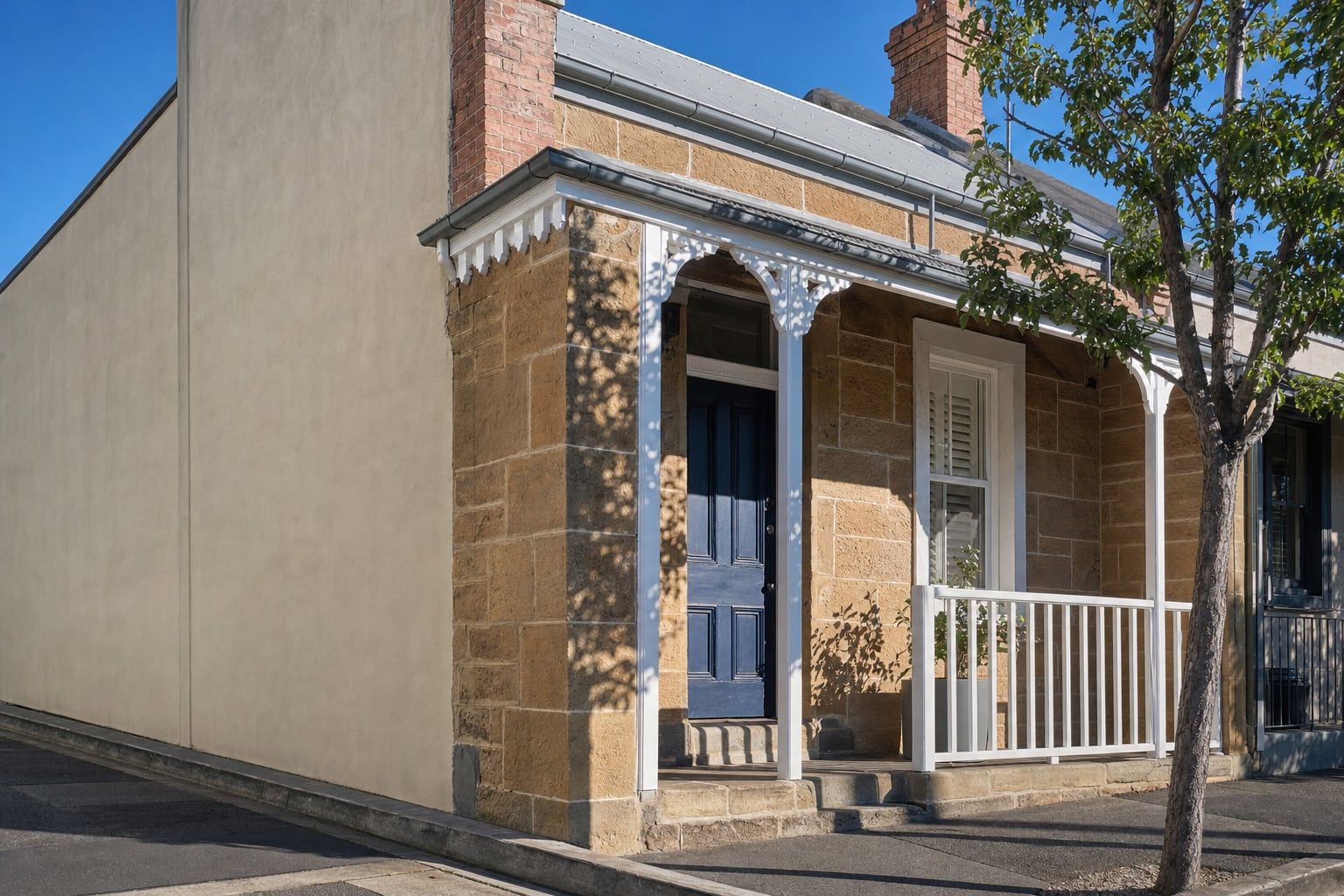
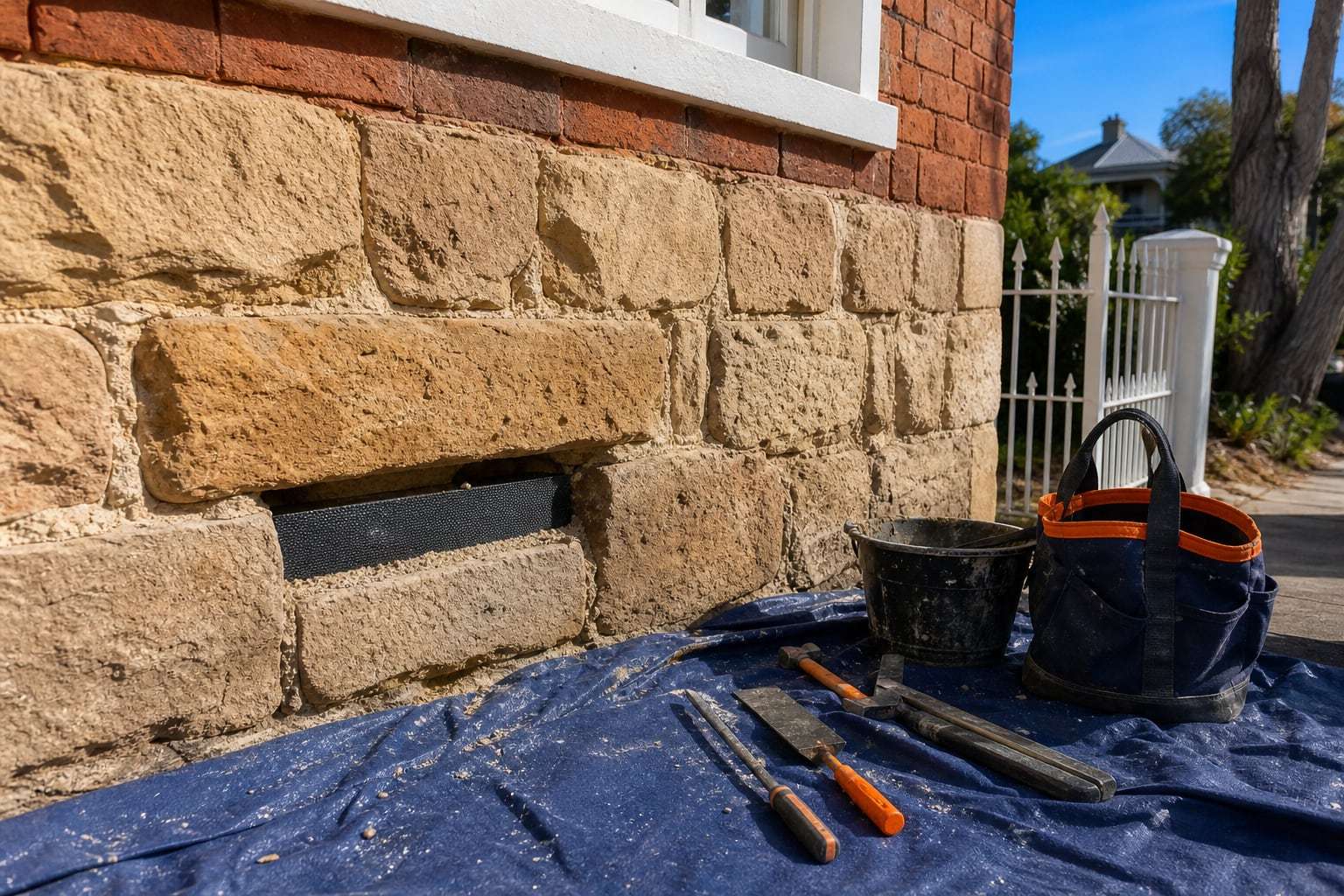
Some walls cannot be injected reliably. Rubble sandstone, the kind found in early cottages in Balmain, Rozelle and Annandale, has irregular joints and voids that let injected cream run away instead of forming a line. Very soft early bricks soak it up unevenly. Walls that have been patched with cement over the years can block it in places. In all of these, a gap in the barrier means the damp keeps rising through it.
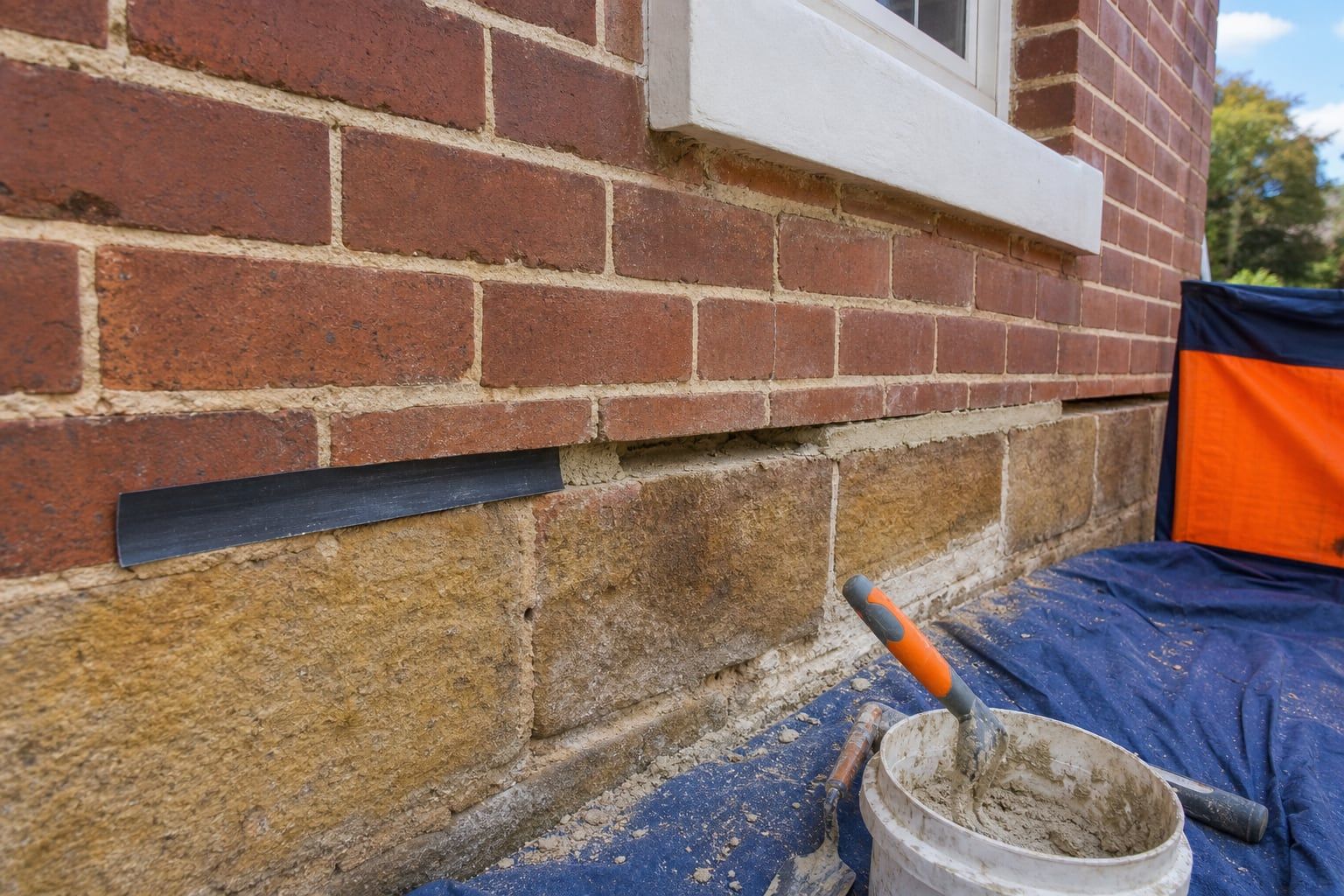
A physical damp-proof course solves that by putting a real membrane into the wall. Instead of relying on a chemical spreading through the mortar, a continuous sheet goes into a joint and stops water passing, whatever the wall is made of.
How it goes in without weakening the wall
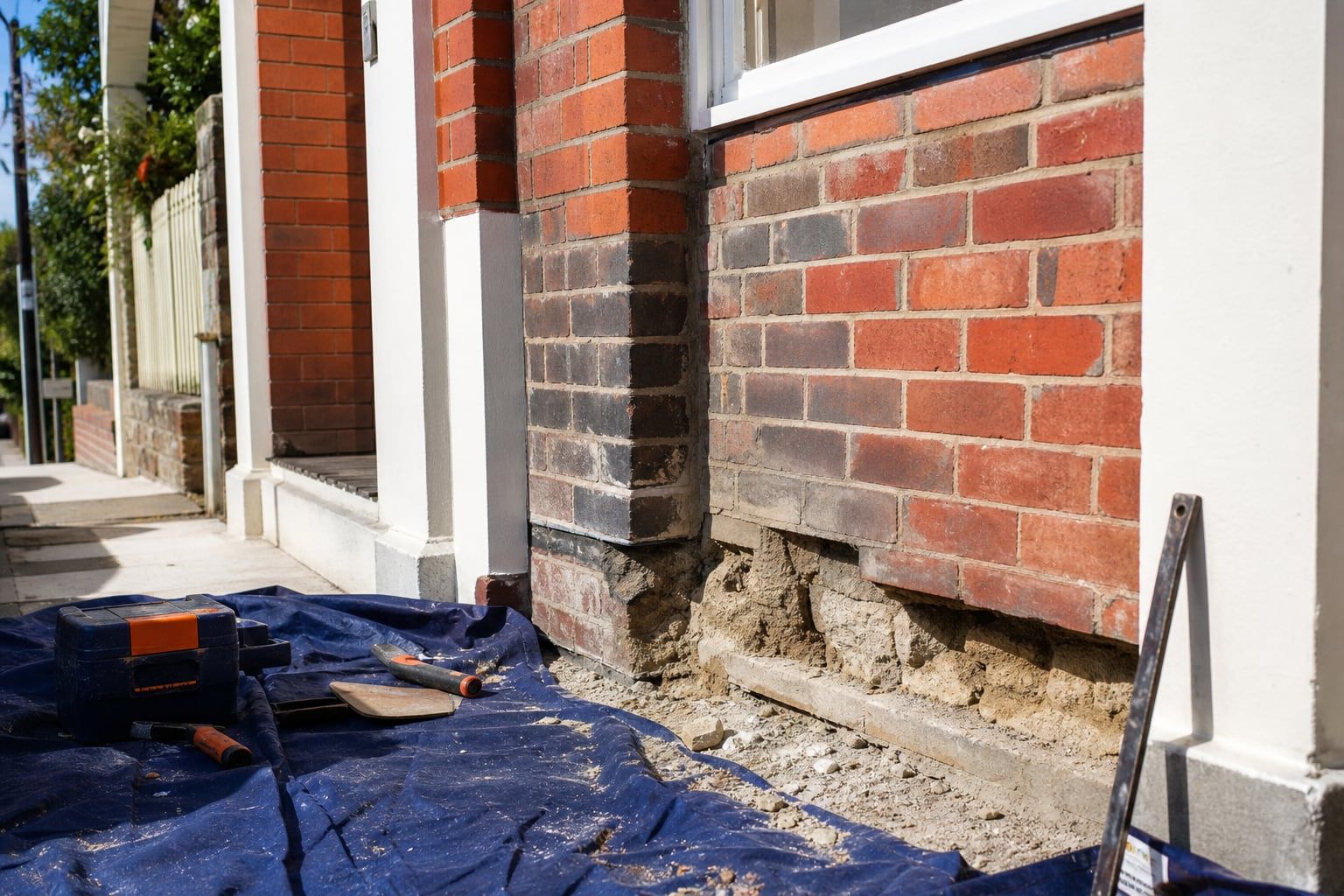
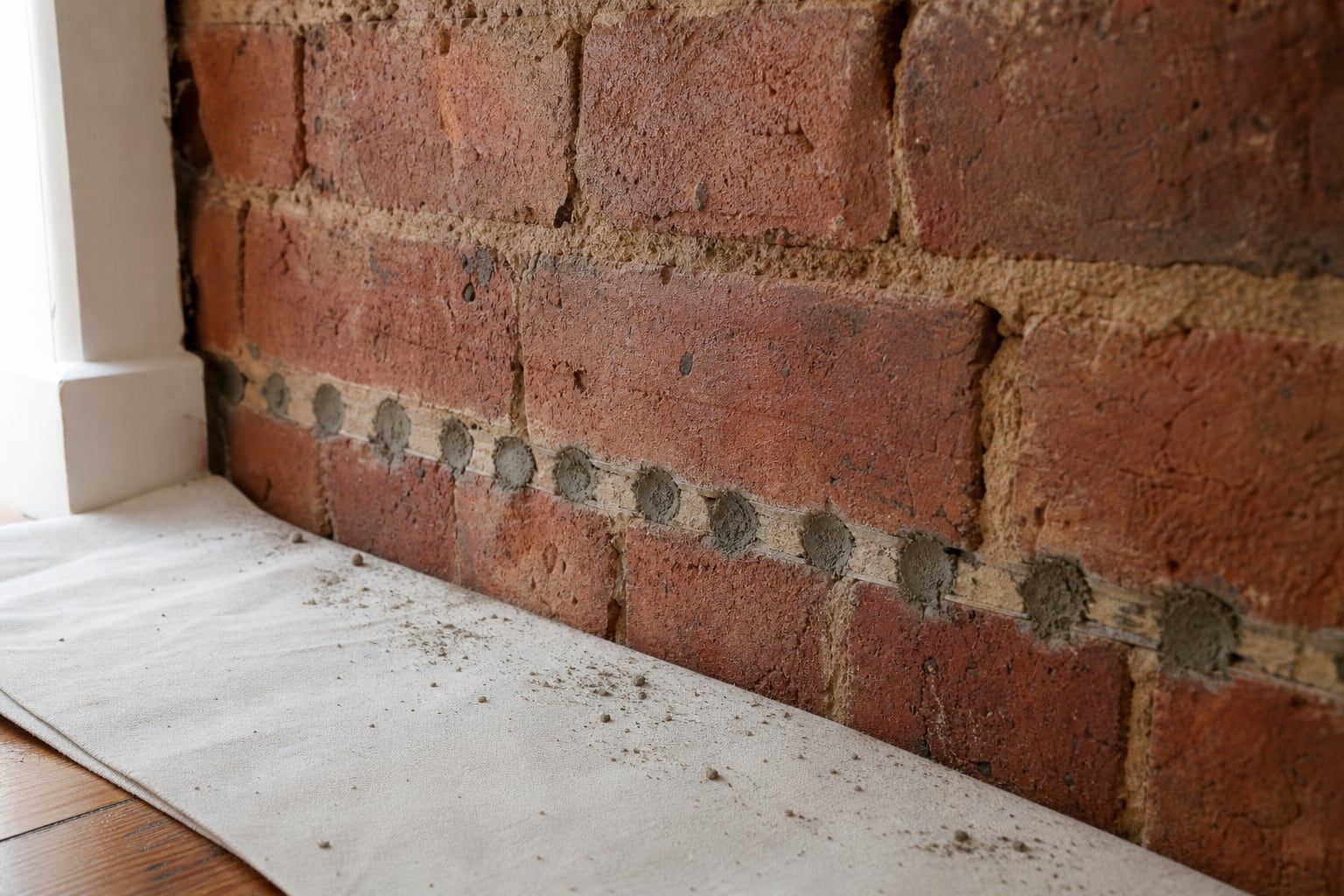
The wall is never opened along its whole length. It is set out in short sections, and alternate sections are done first. In each one, the mortar is cut out of a single joint near the base of the wall, the membrane is laid in, and the joint is packed back tight with mortar. Once those have set, the sections in between are done, with the membrane lapped so the whole line is continuous. At no point is more than a small length of wall without support.
It is slower and noisier than injection, and it costs more per metre. For the walls it suits, it is also the method most likely to last.
Walls we usually recommend it for
- rubble or random sandstone walls in early workers’ cottages
- soft, handmade bricks in some of the oldest houses
- walls with old cement patches that would stop injection spreading
- party walls where only one side can be reached and injection would not cross the full thickness
Where a wall has a sound brick bed, we will tell you injection is the simpler option. The written quote explains which walls get which method and why. Our page on the chemical damp course covers when that cheaper route is the right one.
Matching the mortar
Older walls were built with lime mortar, which stays slightly flexible and lets the wall breathe. Packing them with hard cement mortar can push moisture and salt into the stone or brick next to it. We repack with a mortar suited to the wall, and on face work outside we match the colour and texture of the existing joints so the line does not stand out.
After the membrane
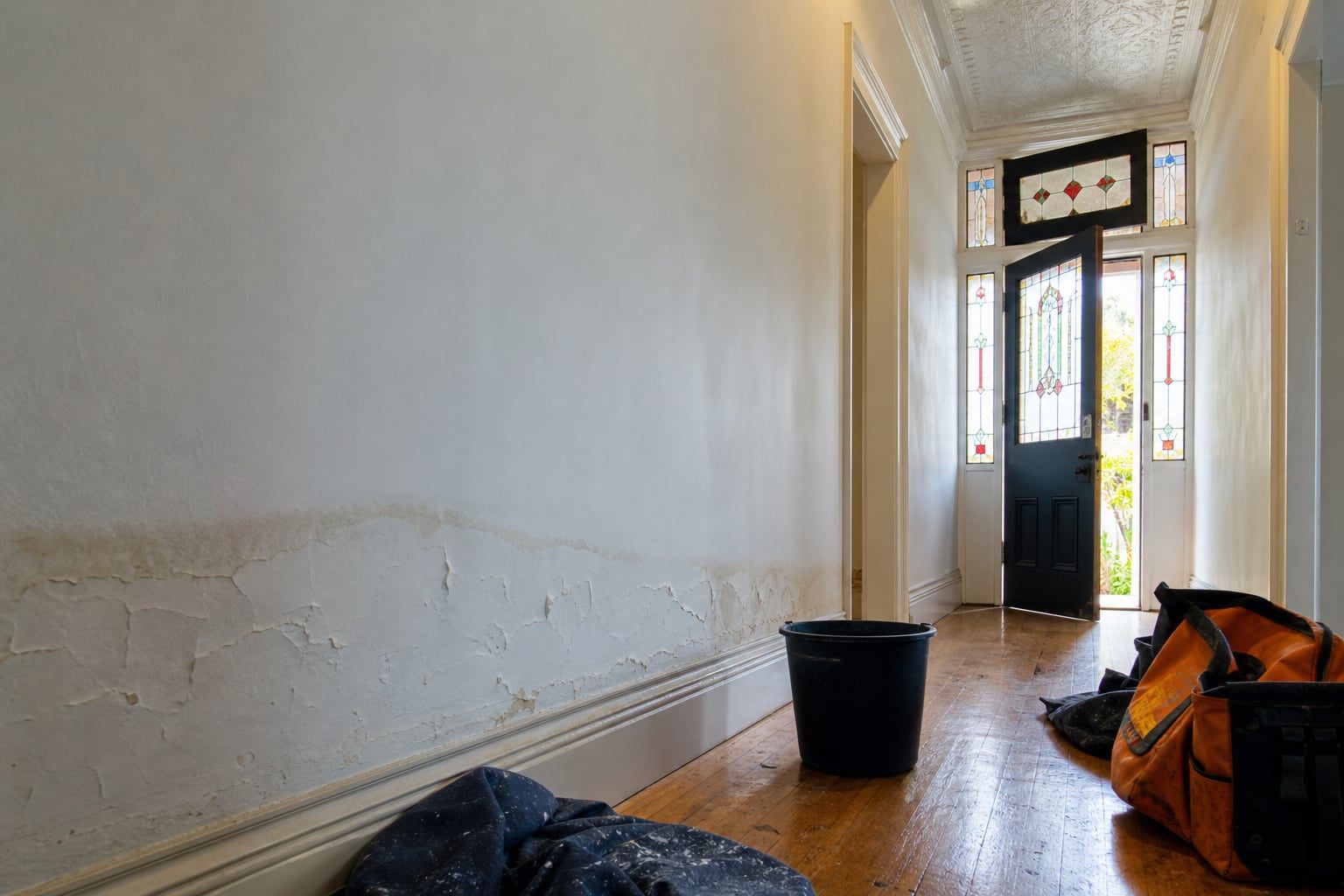
The wall above the new course still holds years of water and salt, so the inside plaster is replaced as part of the same job. Our salt-damaged plaster repair page covers that step, and the reasons stone walls in particular need breathable finishes are set out in our guide to rising damp in sandstone walls.
If the ground outside sits higher than the new course, drainage or waterproof tanking is added so water can’t bypass it. All of this is checked at the free moisture inspection before you get a price.
Time on site
Because each section has to set before the next is opened, a physical course takes longer than injection. A typical cottage wall takes several days, and we plan the order of work so rooms stay usable where possible.
Updated
What good physical damp course looks like
Physical Damp Course across the Inner West
Physical Damp Course in the Inner West: step by step
- Set out the sectionsThe wall is marked into short lengths so only a small part is ever opened at once.
- Open the jointMortar is cut out of one section at the chosen height, keeping the wall above supported.
- Lay the membraneA damp-proof membrane is laid in the joint and lapped to the next section.
- Repack and repeatThe joint is packed tight with mortar and the next section is opened once it has set.
Physical Damp Course guides for Inner West homeowners
Physical Damp Course questions in the Inner West
Something else on your mind? Call 0400 000 004 and ask.
Is it safe to open up a load-bearing wall?
Yes, because only short sections are opened at a time and each is packed solid before the next one starts. The wall above is never left without support across more than a small length.
Can it be done from inside only?
Usually the joint is cut from the side with the best access, often inside. Thick stone walls sometimes need work from both faces.
Will it change the look of my stone wall?
On a face stone or brick wall outside, the joint is repointed in a mortar chosen to match colour and texture. Inside, it is hidden behind new render.