Rising Damp Treatment Inner West
Find out what is wetting the wall, stop it at the base, and get a finished wall back.
Rising damp treatment that starts with a test
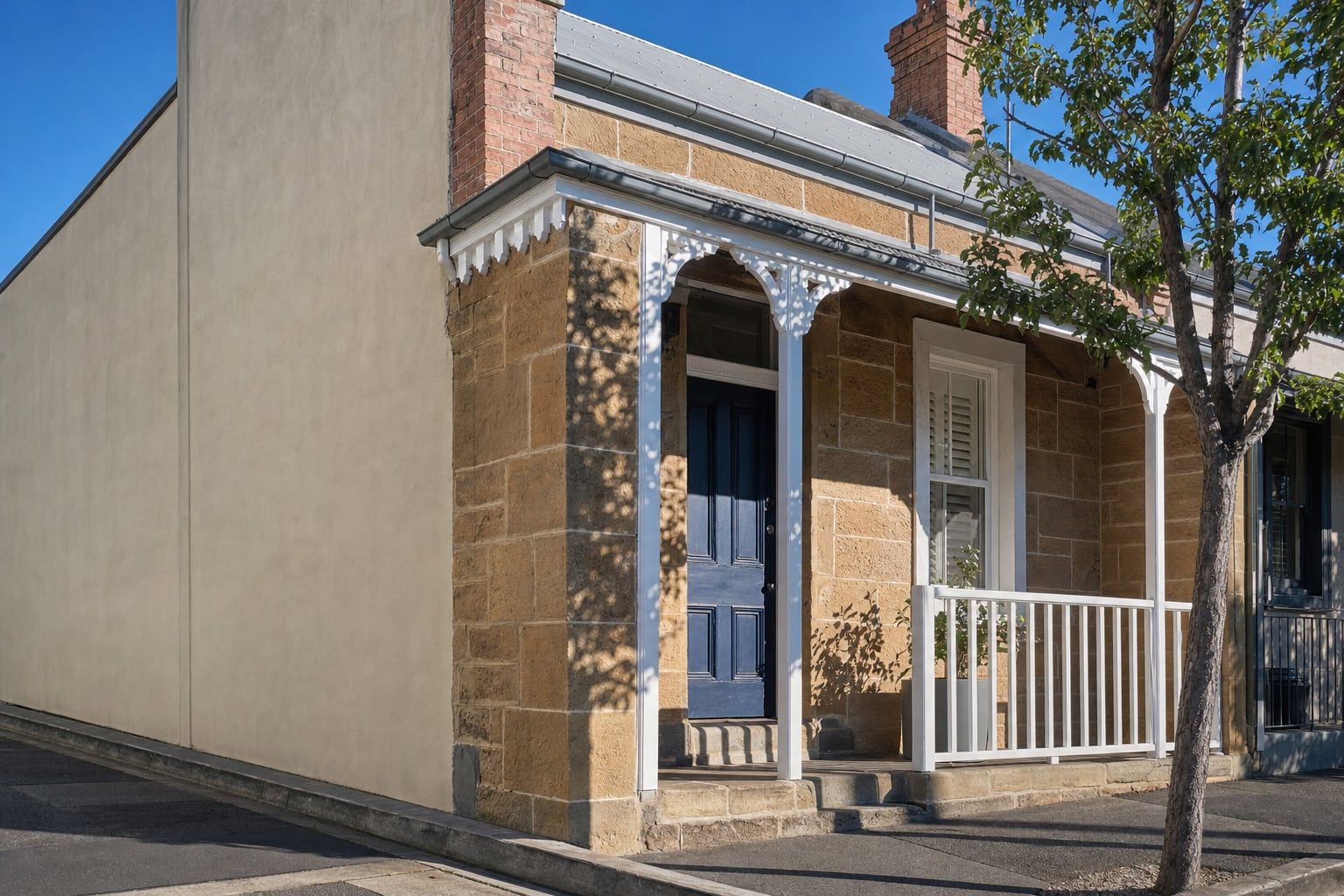
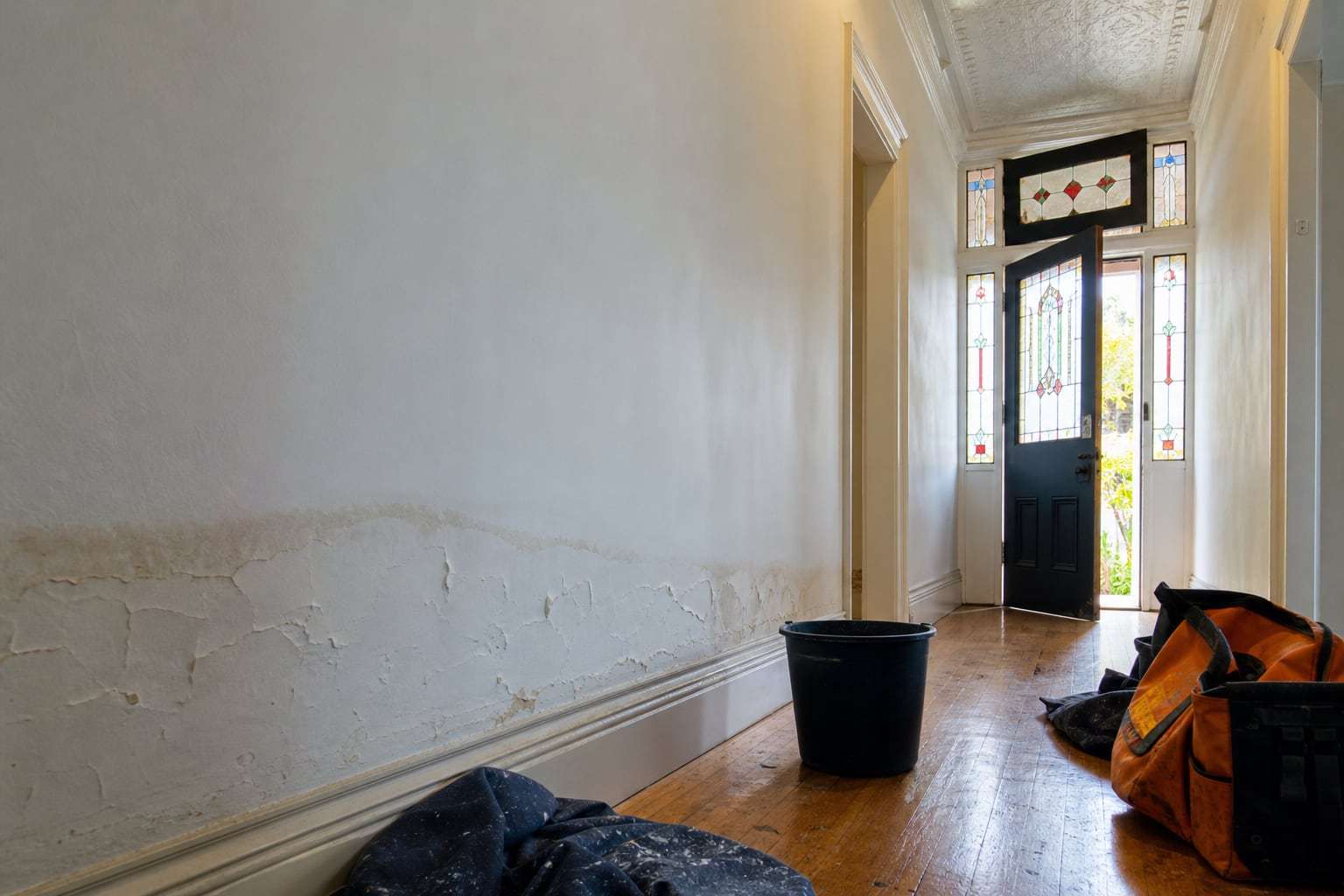
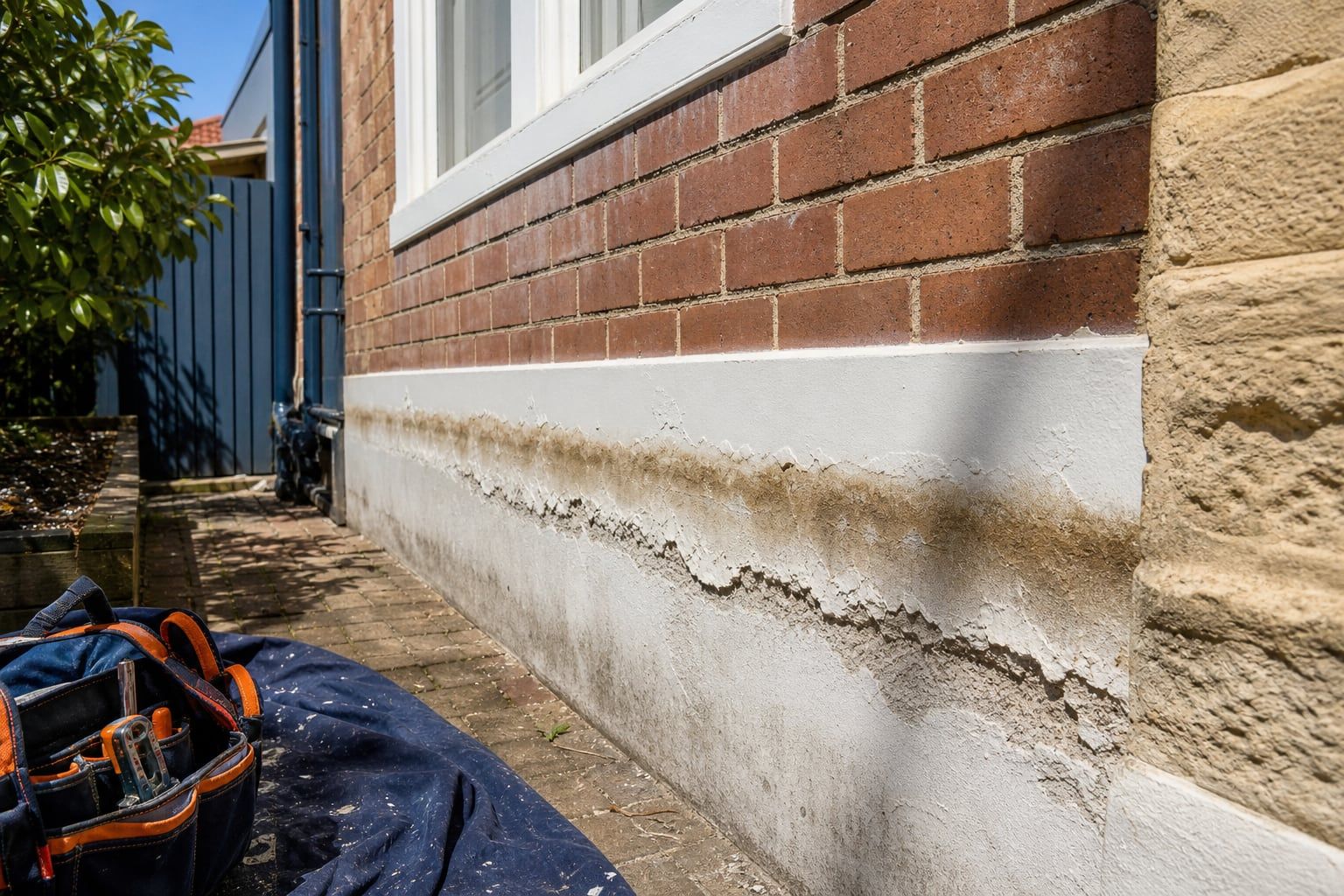
Most Inner West houses built before the 1950s have walls that sit straight on damp ground. The original damp-proof course, if there was one, was a layer of slate, bitumen or tarred felt laid in the brickwork. A century of settling, garden beds built up against the wall and paths poured over the old line means many of those courses no longer do anything. Water rises into the brick and carries salt with it, and the plaster on the inside shows it first.
We do not start with a product. We start with a moisture check. Readings at skirting height, at half a metre and at a metre on each affected wall show whether moisture is coming from the ground, and a salt test on the plaster shows how long it has been happening. Then we look outside at the ground level against the wall, the paths, the downpipes and the drains, and under the floor if there is a subfloor. Only once we know the source do we write the quote.
Choosing the right fix for your wall
The wall decides the method, not the other way round.
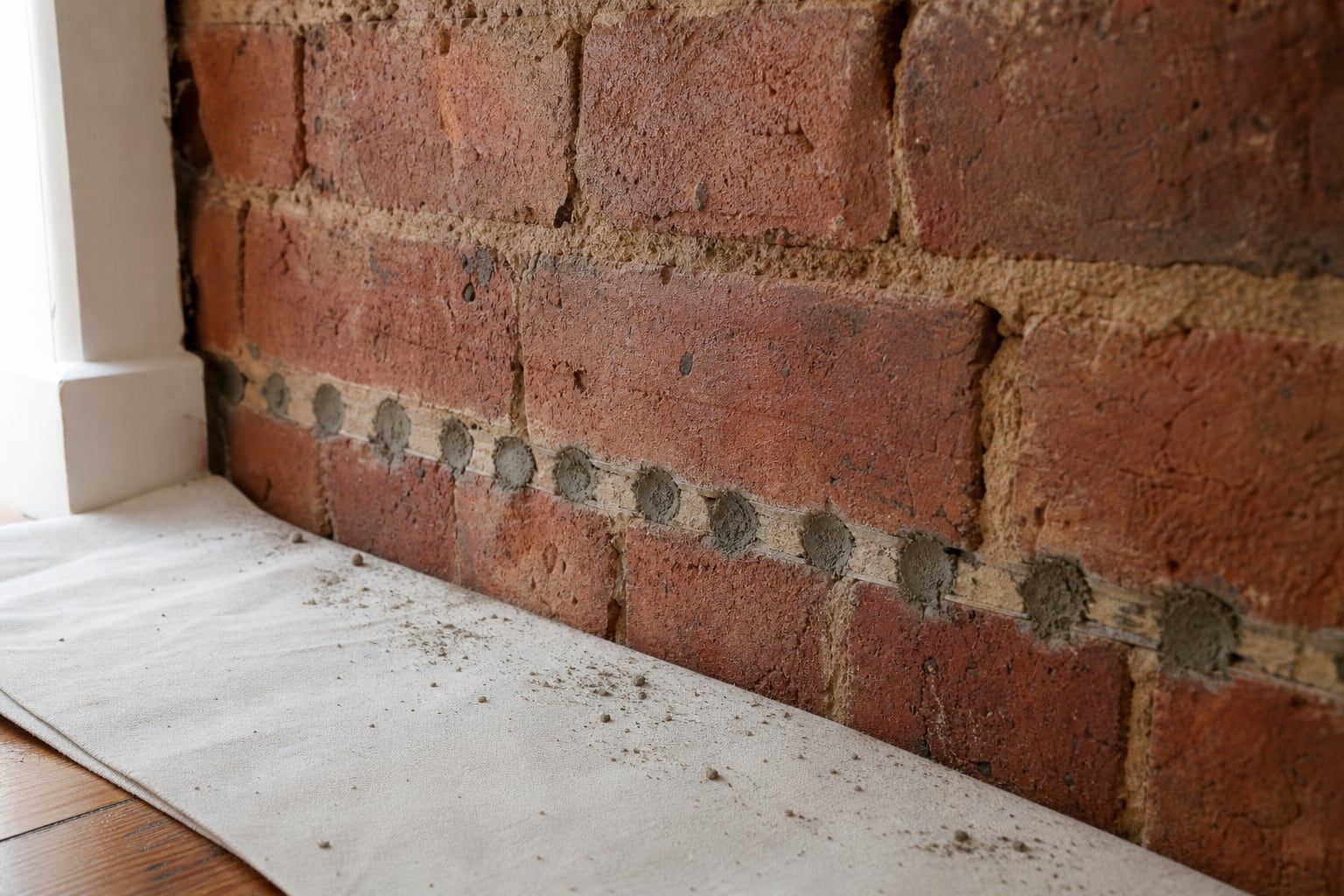
- A chemical damp course is injected into a mortar joint near the base of the wall. It suits most brick walls with a continuous mortar bed and is the least disruptive option.
- A physical damp course puts a membrane into the wall in short sections. It suits rubble sandstone, soft bricks and walls where injection would not spread evenly.
- Where the ground outside is higher than the floor inside, waterproof tanking and drainage keep water off the wall that a damp course cannot reach.
- Where a timber floor sits over a closed-up subfloor, better subfloor ventilation lets the wall and the floor dry from underneath.
Many houses need two of these together. A Federation cottage in Marrickville, for example, might need a chemical course on the brick walls and a new air brick or fan on the side where the neighbour’s extension has blocked the vents.
Why the plaster has to come off
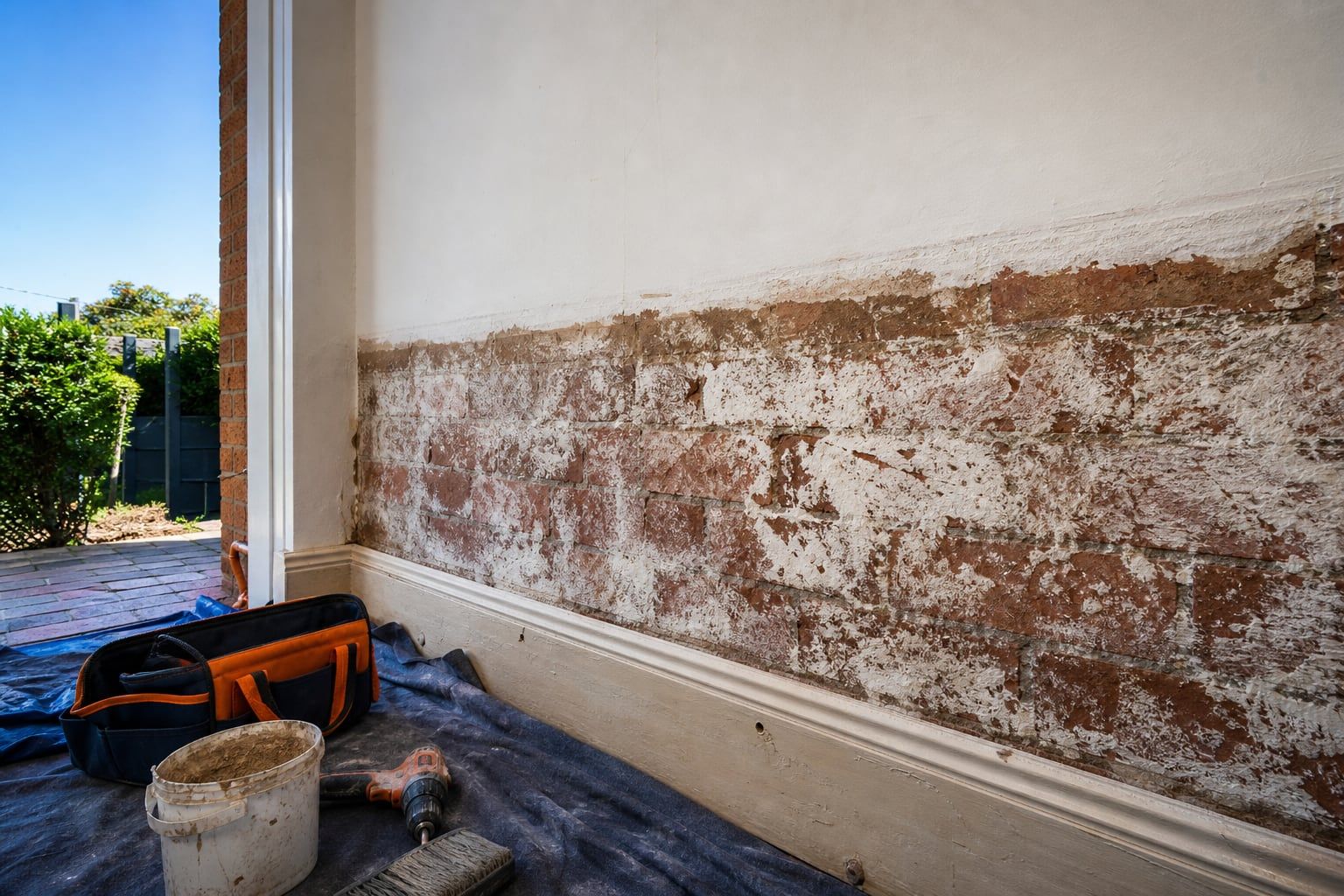
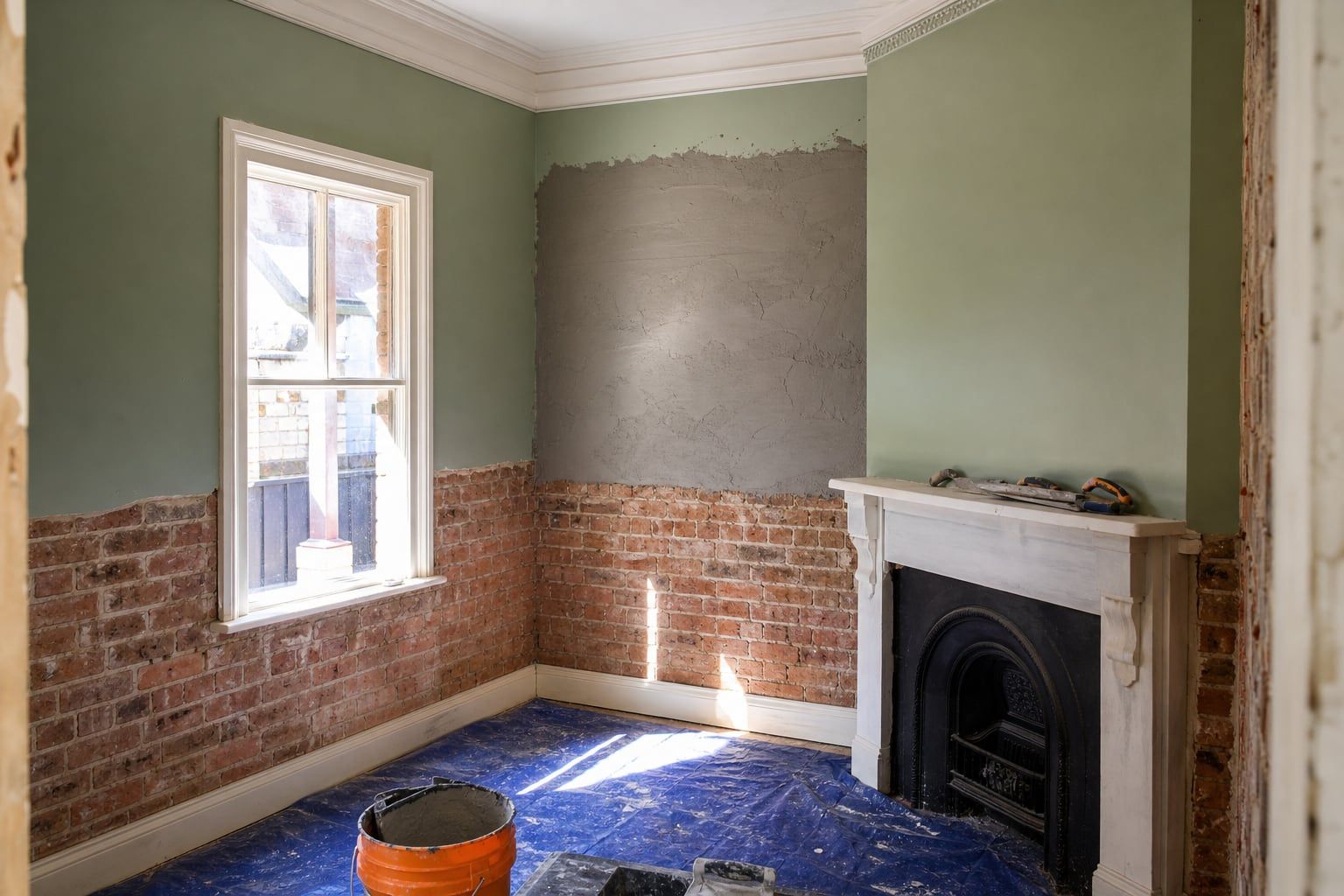
Rising water brings salts out of the ground and the brick. As the water evaporates from the wall surface, the salts are left in the plaster. They draw moisture out of the air, so a wall can feel damp on humid days even after the rising water has been stopped. That is why salt-damaged plaster repair is part of every quote we write. The old plaster comes off to a line above the highest salt, the wall dries, and a salt-resistant render goes back on.
What to expect on the day
Furniture is pulled away from the walls and covered, floors are protected, and the work is noisy for a few hours while plaster is removed and holes are drilled or sections are cut. Most single-storey jobs take one to three days for the damp course and plaster removal, then the render goes on after the drying time set for your walls.
If you are not sure yet whether it is rising damp at all, our guide on rising damp or condensation walks through the signs. Or book the free moisture check and we will tell you on site. We cover homes right across the area, and our main page on Inner West rising damp explains how the visit works.
Updated
What good rising damp treatment looks like
Rising Damp Treatment across the Inner West
Rising Damp Treatment in the Inner West: step by step
- Read the wallsWe take meter readings low and high on each damp wall and test the plaster for salts.
- Check outside and underneathGround levels, paths, downpipes and the subfloor are checked for anything feeding the wall.
- Treat the causeA new damp-proof course goes in, with drainage or airflow fixed where they are part of the problem.
- Finish the wallSalty plaster is replaced with a salt-resistant render once the wall has had time to dry.
Rising Damp Treatment guides for Inner West homeowners
- Rising damp or condensation: how to tell which one your house hasThe signs that separate water rising from the ground from water forming on cold surfaces, and why the fix is completely different.
- Damp walls after rain: when wet walls aren't rising dampThe leaks, splashback and drainage problems that make walls wet after rain, how they differ from rising damp, and how each is fixed.
Rising Damp Treatment questions in the Inner West
Something else on your mind? Call 0400 000 004 and ask.
Is it rising damp or a leak?
Rising damp is wettest at the bottom of the wall and fades out somewhere below about a metre, and it is there in dry weather too. A leak usually shows up after rain, sits in one spot or is wettest higher up. Meter readings at several heights make the difference clear.
Can I treat just one room?
Yes, if the damp is only in one room. We often find it runs further along the same wall than it looks, so we read the walls either side before quoting.
Will the wall be dry straight away?
No. The new course stops more water rising, but the brick above still holds moisture and salt. Walls dry over weeks to months depending on thickness, which is why the plaster repair is timed and specified for it.