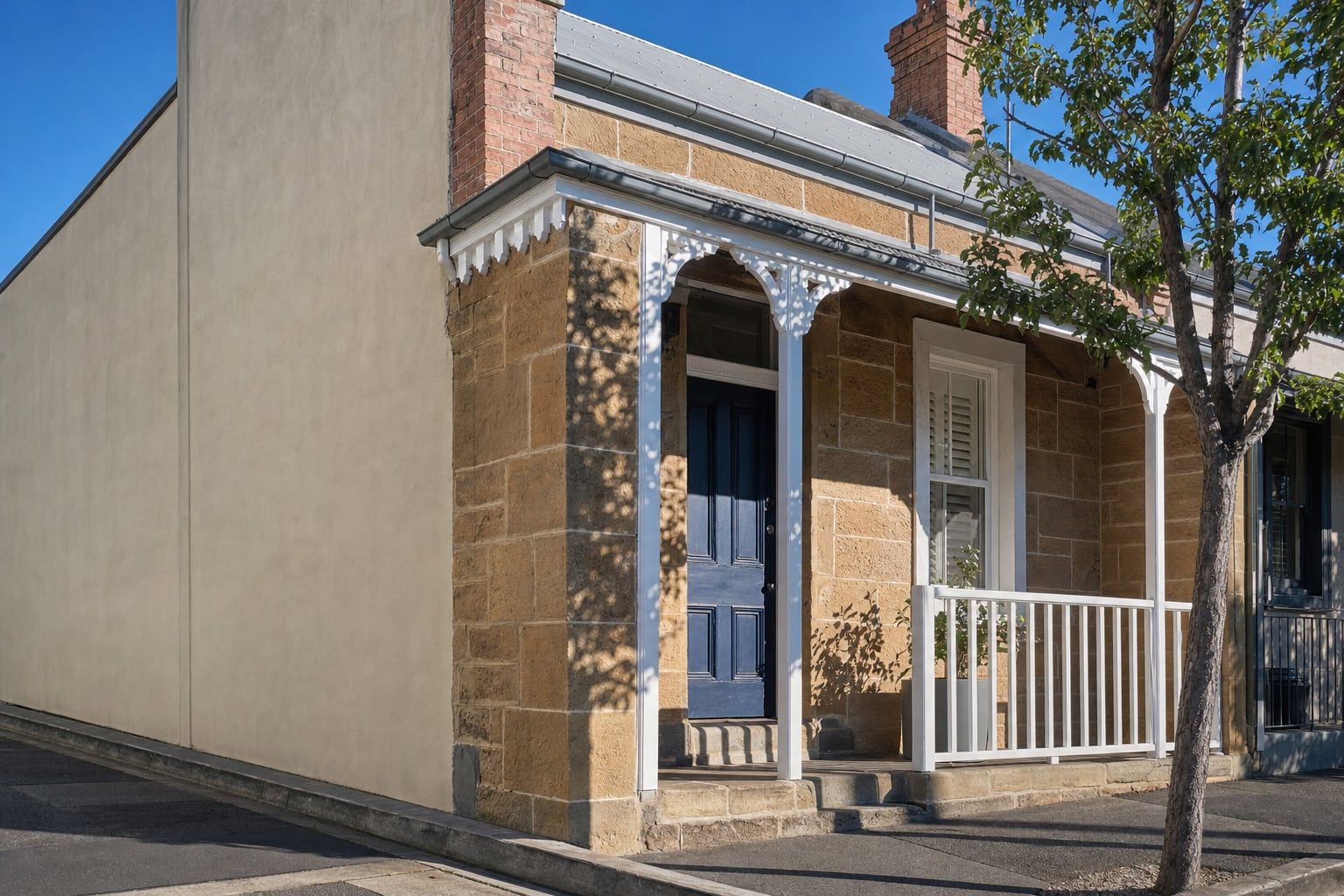
Subfloor Ventilation Inner West
Get air moving under the floor again, so the timbers, walls and rooms above can dry out.
Why the space under the floor matters
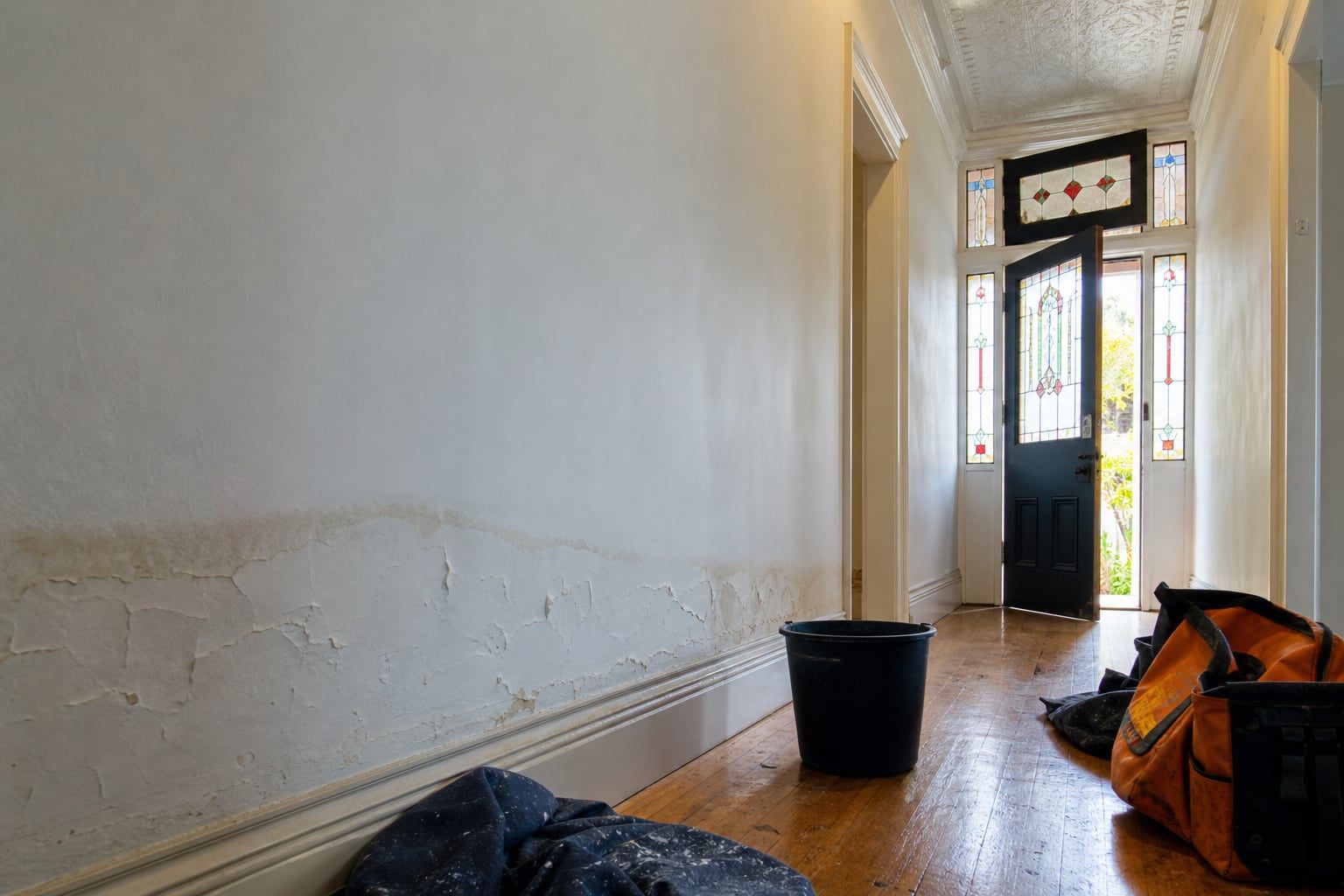
Many Inner West homes have timber floors sitting on bearers and joists over a brick subfloor. The space under the floor needs air moving through it. When it is still, moisture from the soil hangs around, the timbers take it up, the base of the walls stays wet, and the rooms above smell musty.
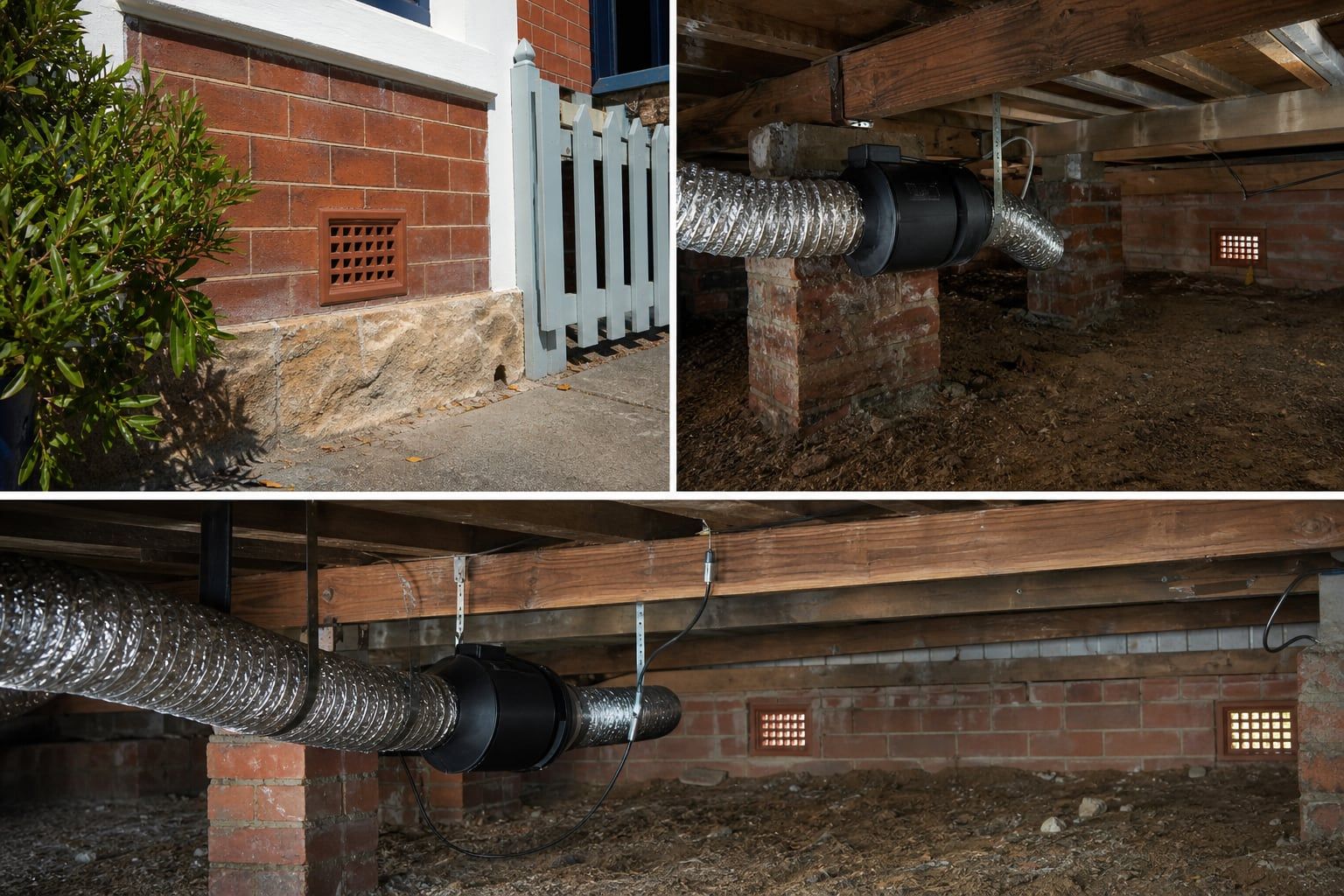
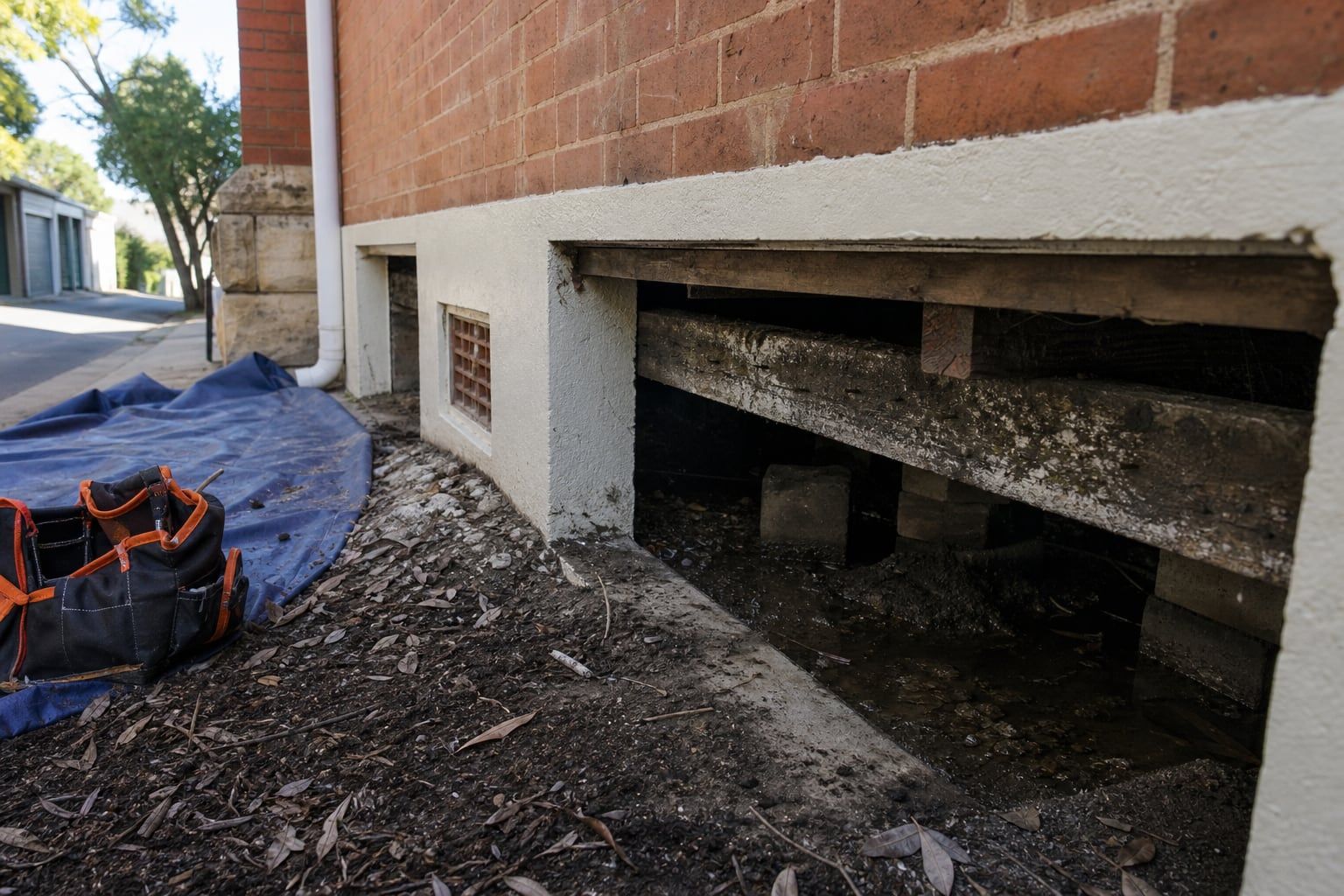
The original builders allowed for this with air bricks along the base of the walls. Over the decades, many of those vents have been painted over, covered by paving or garden beds, or closed off when a kitchen or bathroom was extended at the back. One side of the house might still have vents while the other has none, so there is no cross-flow at all.
What we look for underneath
Every job starts with a visit under the floor. We check:
- how wet the soil is, and whether water is pooling after rain
- moisture readings on bearers, joists and the base of the walls
- which vents are open, which are blocked, and which side has none
- signs of mould, rot or borer in the timbers
- whether downpipes or garden beds are sending water under the house
From that we mark up a simple plan showing where the air needs to go.
Passive vents first
Often the cheapest fix is the most effective one. Clearing blocked vents, lowering soil and paving that has buried them, and cutting new air bricks into walls that have none can restore cross-flow without any power. Where the walls are face brick, new vents are chosen to suit the brickwork.
Fans where passive airflow can’t reach
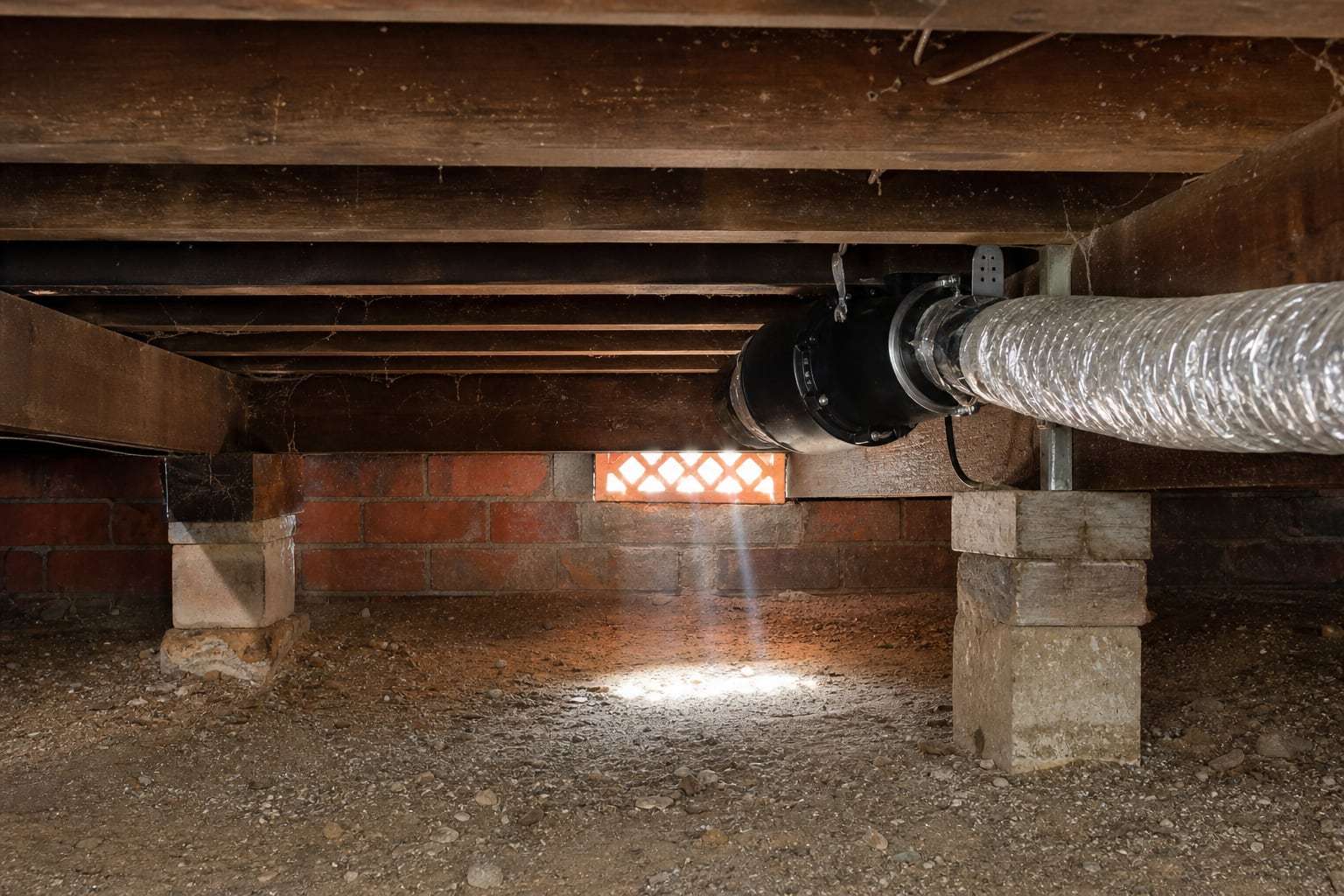
Some subfloors cannot get enough air from vents alone: houses with an extension on a slab along one side, terraces with only a front and back wall to vent through, or low subfloors with little room for air to move. For these, inline fans and ducting push air into the dead corners and draw damp air out. They can run on a timer or humidity control, so they are not on all day.
Subfloor damp and rising damp
A damp subfloor and rising damp often go together. The same wet ground that feeds the subfloor feeds the walls, and the base of a wall that never dries from underneath stays damp longer. On many jobs the answer is airflow under the floor plus a chemical damp course in the walls. If you are not sure which you have, our page on rising damp treatment explains how we tell the difference.
Outside water first
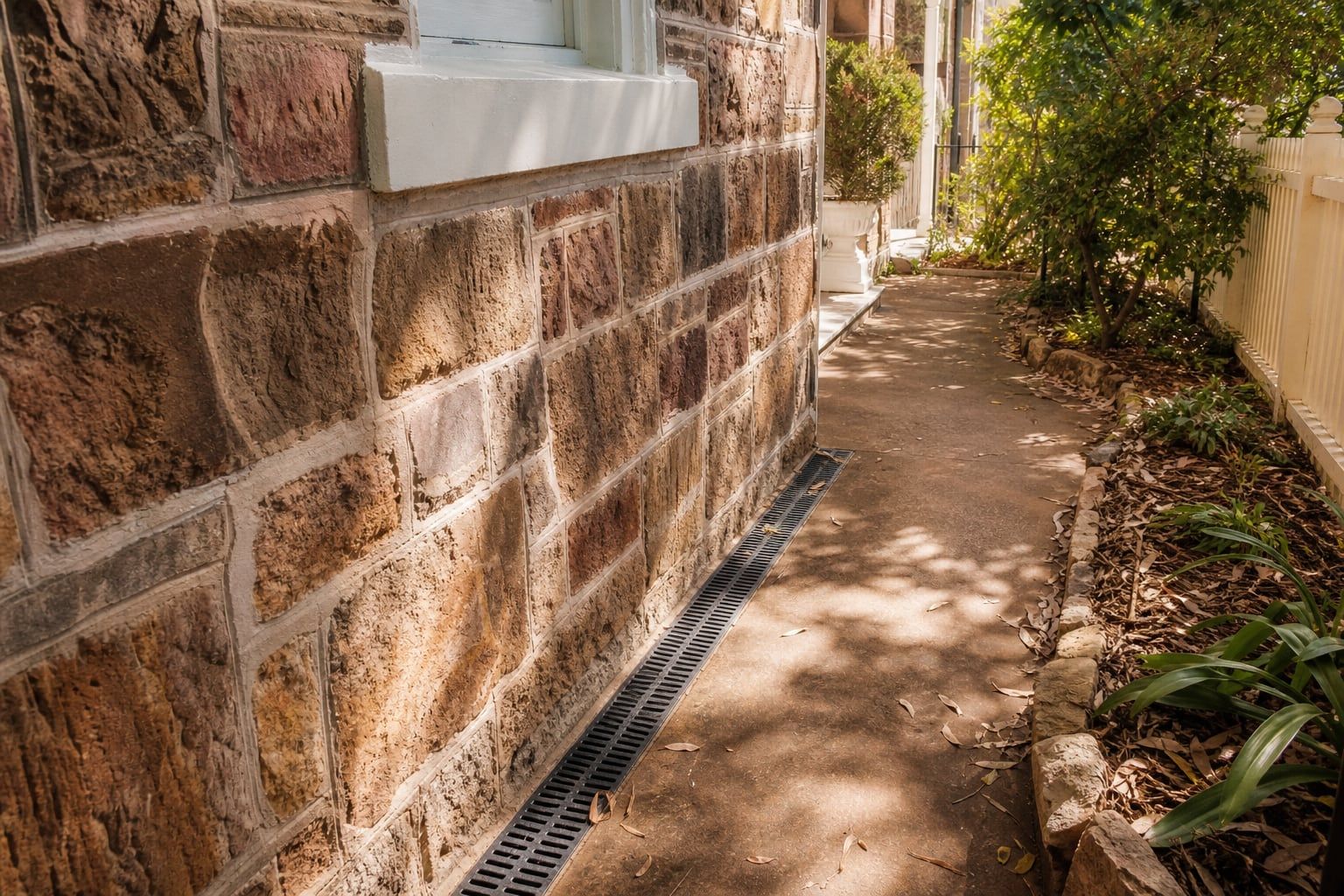
Ventilation can’t keep up with a subfloor that floods. If a downpipe empties against the house or the yard falls towards it, we include the drainage fix in the quote. Our tanking and drainage page covers how water is kept away from the walls.
Condensation inside
A still, damp subfloor can also make a house feel humid. If you are seeing mould on ceilings and windows rather than low on the walls, read our guide on rising damp or condensation before deciding where to start.
Checking it works
After the vents and fans are in, we take moisture readings on the bearers and walls again at a follow-up visit, so you can see the subfloor drying rather than taking it on trust.
Updated
What good subfloor ventilation looks like
Subfloor Ventilation across the Inner West
Subfloor Ventilation in the Inner West: step by step
- Go underneathWe check the soil, timbers and existing vents, and take moisture readings on bearers and walls.
- Find the dead spotsAreas with no cross-flow, often behind extensions or slabs, are marked on a simple plan.
- Open up and addBlocked vents are cleared and new air bricks are cut in where the walls allow.
- Fan where neededInline fans and ducting push air into the corners passive vents can't reach.
Subfloor Ventilation guides for Inner West homeowners
Subfloor Ventilation questions in the Inner West
Something else on your mind? Call 0400 000 004 and ask.
Are subfloor fans noisy?
The inline fans we fit are designed to run under a house and are fixed with mounts that stop vibration reaching the floor. Most owners can't hear them from inside.
How much power do the fans use?
Small inline fans use a modest amount of power, and can be put on a timer or humidity controller. A licensed electrician provides the power point under the house.
My vents are already there. Why is it still damp?
Vents only work when air can pass from one side of the house to the other. Paving, decks and extensions often block one side, leaving the air under the floor still.