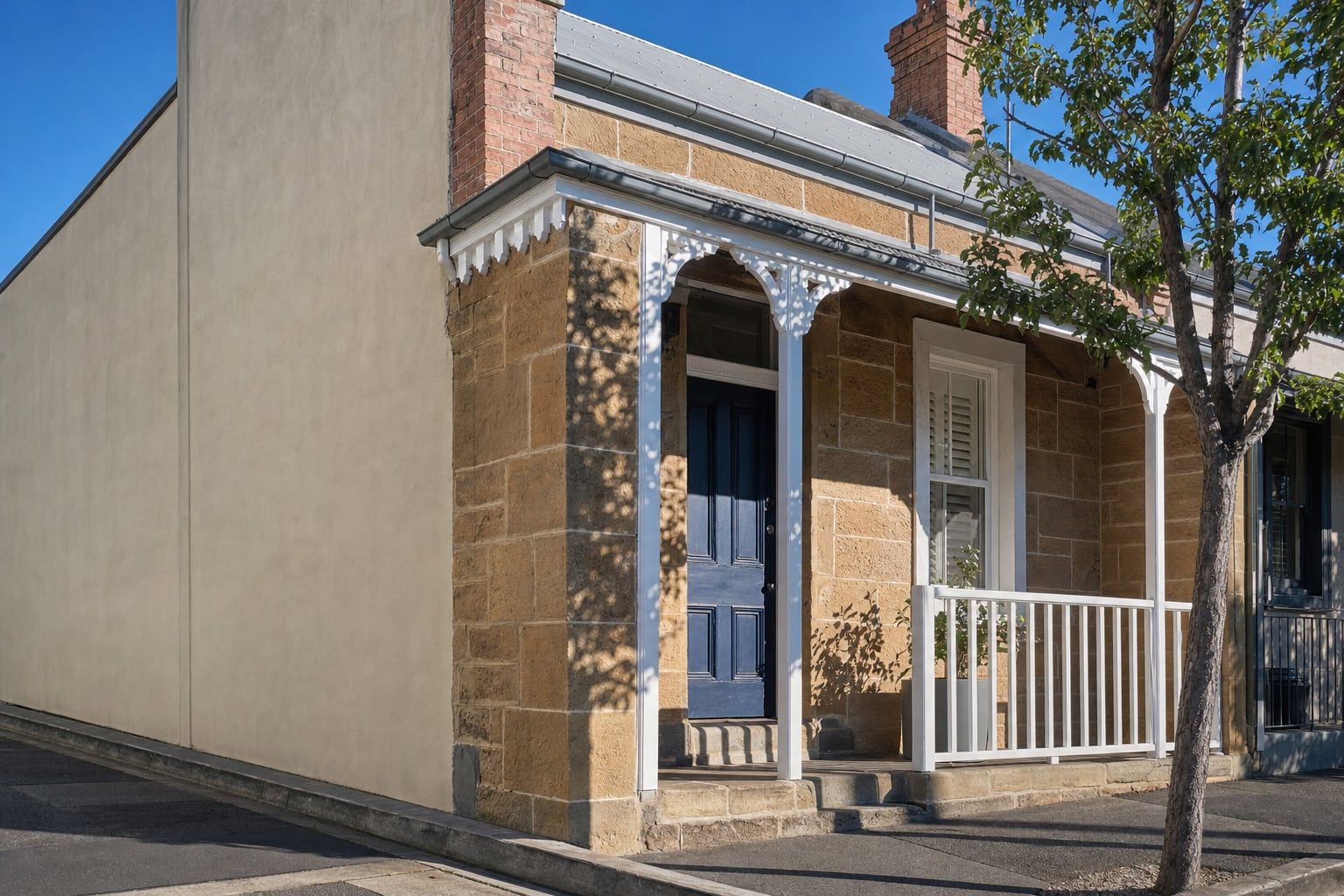
Damp walls after rain: when wet walls aren't rising damp
The leaks, splashback and drainage problems that make walls wet after rain, how they differ from rising damp, and how each is fixed.
Damp that comes and goes with the weather
A wall that darkens or stains after a storm and then dries out over the following week is telling you something useful. Water is getting in from outside, not rising steadily from the ground. Rising damp is there all year round, even in a dry spell, so damp that tracks the weather usually has a different cause and a different fix.
It’s an easy mistake to make, and plenty of people pay for a damp-proof course on a wall that was actually wet from a blocked gutter. In older Inner West houses, with narrow side paths, shared walls, old gutters and decades of renovations, water from outside is one of the most common causes of damp walls.
The usual culprits
Splashback from hard paving
When a path or courtyard is paved right up to the house, heavy rain bounces off it and soaks the bottom of the wall. If the paving has also been laid higher than the original ground level, the splash reaches above the damp-proof course. The tell-tale sign is damp in a band along the bottom of the wall that appears after rain and fades in dry weather, on the side where paving meets the brickwork.
Ground or paving higher than the floor
Over a century, many paths, courtyards and garden beds have crept up. When soil or paving sits above the floor level inside, or above the original damp course, rain soaks straight into the wall above the barrier. This can look exactly like rising damp, and often comes with it.
Downpipes and gutters
A downpipe that empties onto the ground next to the house, a broken stormwater connection, or a gutter that overflows in heavy rain can pour a huge amount of water against a short length of wall. The damp is concentrated in one area, often below the downpipe or a corner of the roof.
Leaks higher up
Failed flashings around chimneys and parapets, cracked render, gaps around window frames and failed pointing can all let rain into the wall. Water then runs down inside the wall and shows up lower down. A patch that starts above a window, or damp that is wettest partway up the wall, points to a leak rather than rising damp.
Shared walls and neighbours
On terraces and semis, the problem may be next door: a neighbour’s gutter, a box gutter between roofs, or their courtyard paving built against the party wall. These need a conversation as well as a repair.
How to tell it from rising damp
- Timing: wet after rain and dry a week later points to water from outside. Damp year-round points to rising damp.
- Height: rising damp is worst at the floor and fades below about a metre. Leaks can start anywhere and are often wettest higher up.
- Pattern: rising damp runs as a fairly even band along a wall. Rain damp is often patchy, concentrated near downpipes, corners and openings.
- Salt: long-term rising damp leaves a heavy salt band in the plaster. Rain damp usually leaves staining without much salt, unless it has been going on for years.
Many houses have both. A wall can have rising damp all year and get worse after rain because the ground is saturated and splashback adds to it. The answer is then a fix for each.
Fixing water from outside
The fix depends on the source:
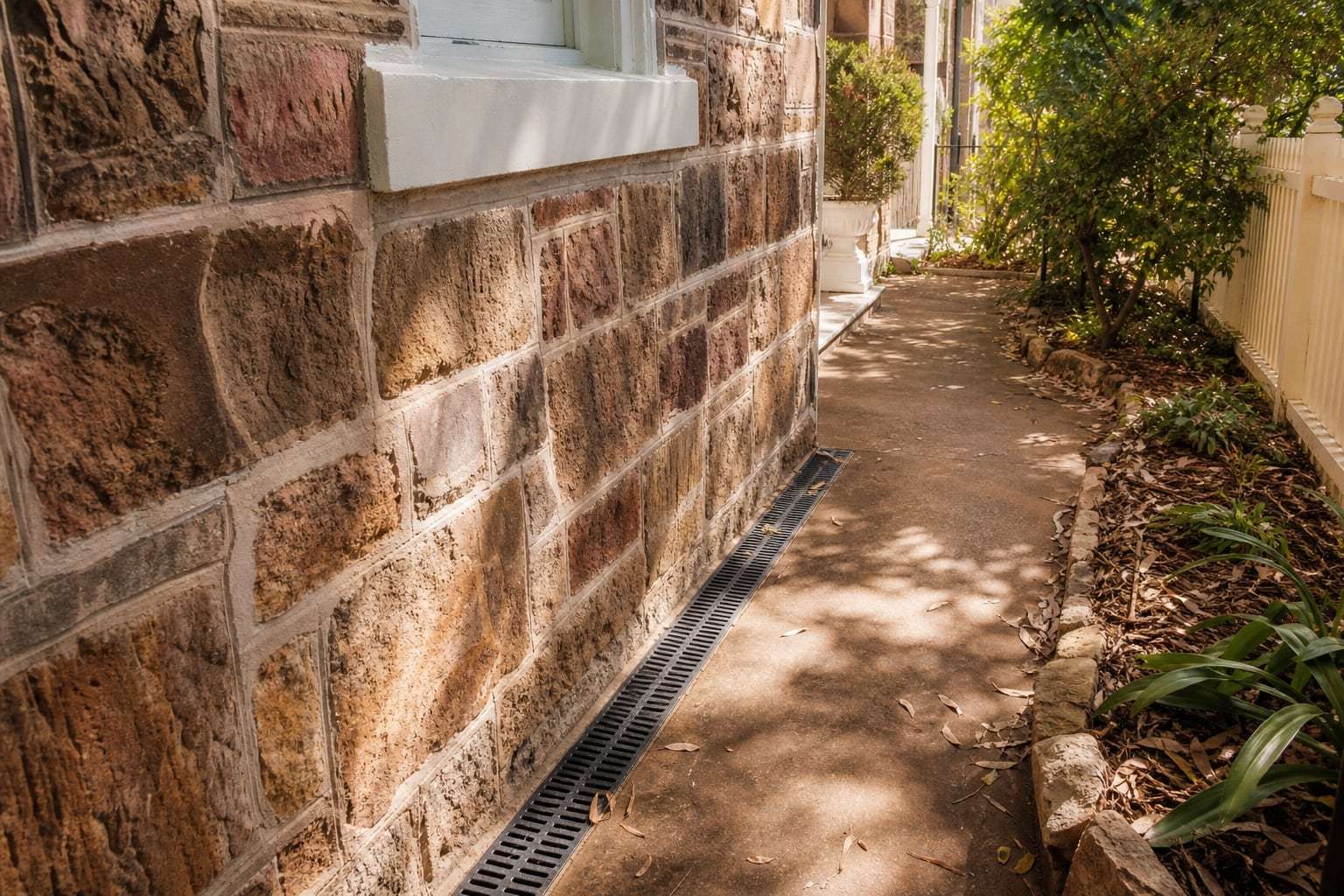
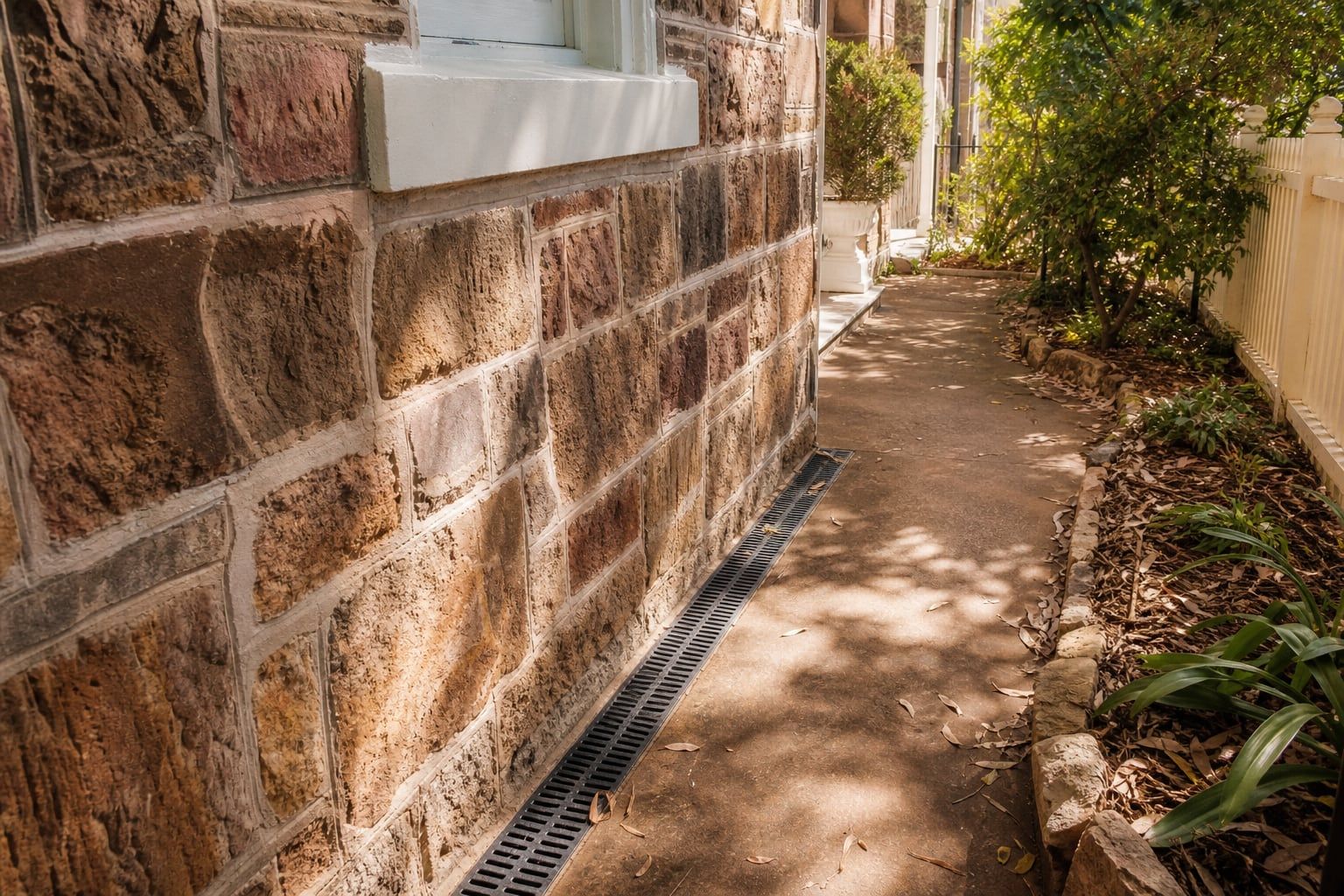
- Lower or regrade paving so it sits below the floor and falls away from the wall, or add a drain along the base of the wall where it can’t be lowered.
- Pull garden beds back from the wall and keep soil below the damp course.
- Connect downpipes to stormwater properly, or redirect them away from the house.
- Clean and repair gutters, and check box gutters between terraces.
- Repoint or repair failed mortar, cracked render and flashings with materials that suit the wall.
Where soil has to stay against a wall, such as a rear room cut into a slope, the wall needs waterproof tanking on the inside face, joined to a damp course on the walls around it.
Don’t seal the wall
It’s tempting to coat the outside of a damp wall with a clear sealer or cement render. On old brick and sandstone, that usually makes things worse. These walls need to breathe, and sealing the outside traps moisture inside, pushing it towards the plaster in the room. Fix where the water gets in, and let the wall dry naturally.
When it is rising damp too
If the wall stays damp in dry weather, has a salt band near the floor, and is wettest at the bottom, rising damp is likely part of the picture. Our page on rising damp treatment explains how we test for it, and our chemical damp course page covers the most common fix for brick walls.
If the damp is high on walls and ceilings and comes with mould rather than salt, our guide on rising damp or condensation will help.
Getting it checked
The fastest way to know is a check on the day after rain, when the pattern is easiest to read. We look at the walls inside, trace the water outside, check the subfloor, and tell you whether it’s rain, rising damp or both. Our main page on damp proofing Inner West homes explains how the free moisture check works.
Updated
Damp walls after rain: common questions
Something else on your mind? Call 0400 000 004 and ask.
Why does my wall only get damp when it rains?
Water is getting in from outside. The usual causes are splashback from hard paving, a downpipe or gutter overflowing against the wall, soil or paving higher than the floor, or a crack, failed pointing or a leaking window or flashing.
Can rain make rising damp worse?
Yes. Saturated ground feeds more water into a wall that already has rising damp. But if the damp disappears completely in dry weather, rising damp is unlikely to be the main cause.
Should I seal the outside of the wall?
Usually not. Clear sealers and cement render on older brick and stone trap moisture inside the wall and can make damp worse. Fix where the water is getting in instead.
Waterproof Tanking and Drainage in the Inner West
More guides for Inner West homeowners
- Rising damp or condensation: how to tell which one your house hasThe signs that separate water rising from the ground from water forming on cold surfaces, and why the fix is completely different.
- Rising damp in sandstone walls: why stone cottages need different treatmentWhy sandstone walls in early Inner West cottages take up ground water, the damage it does, and which repairs work on stone.