Salt-Damaged Plaster Repair Inner West
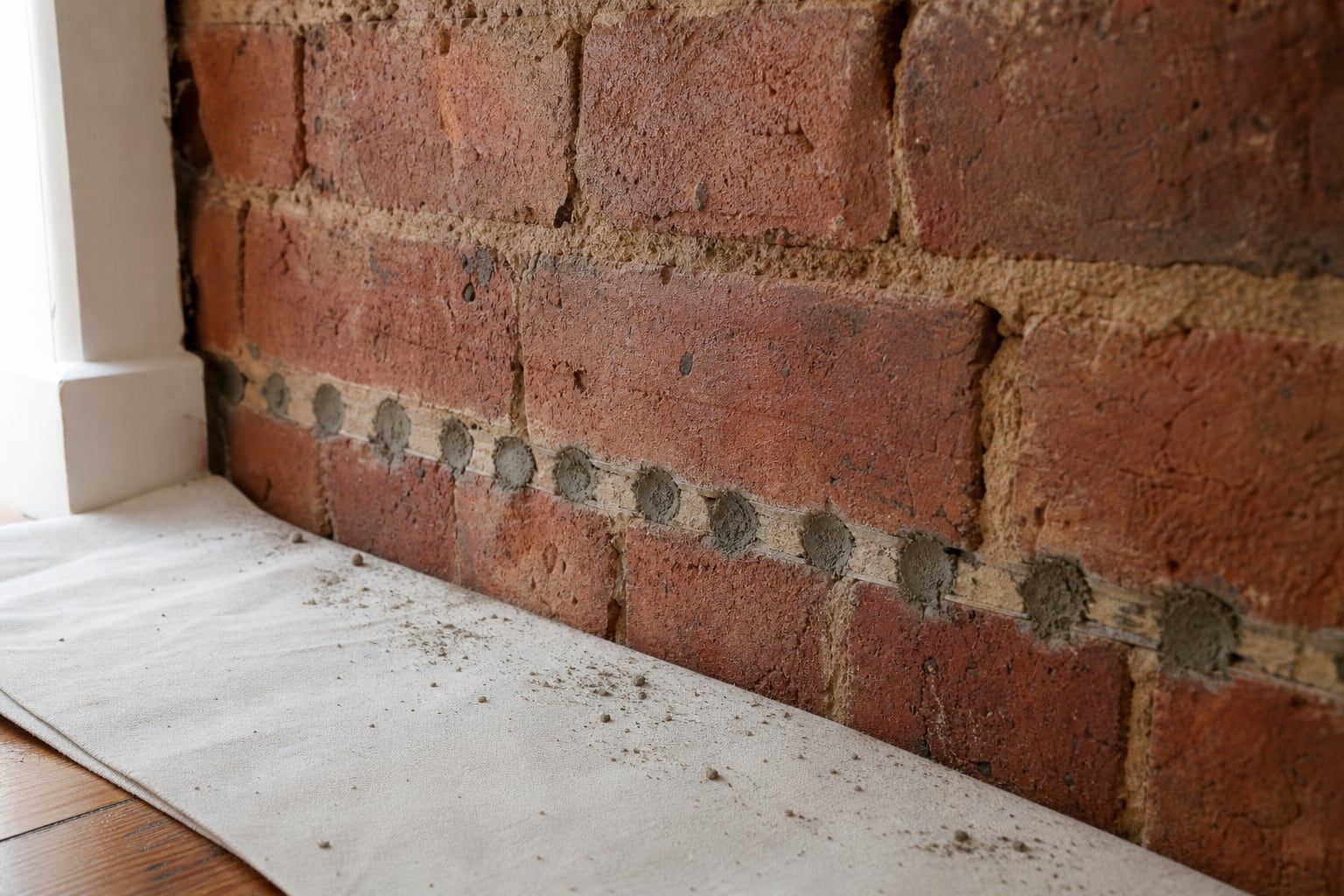
Strip the salt-loaded plaster, let the wall dry, and finish it with a render made for damp-affected walls.
Why damp walls keep failing after they’re painted
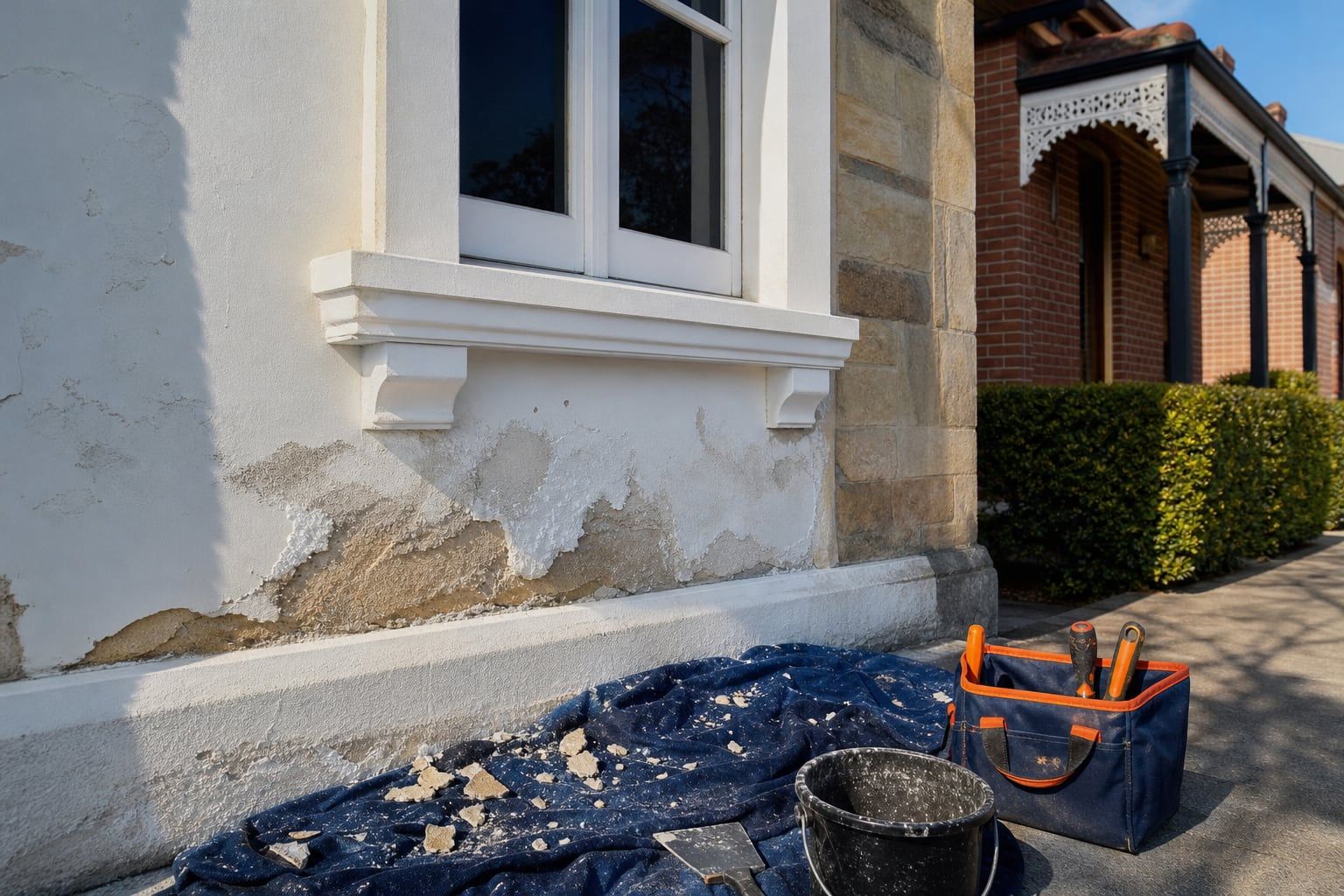
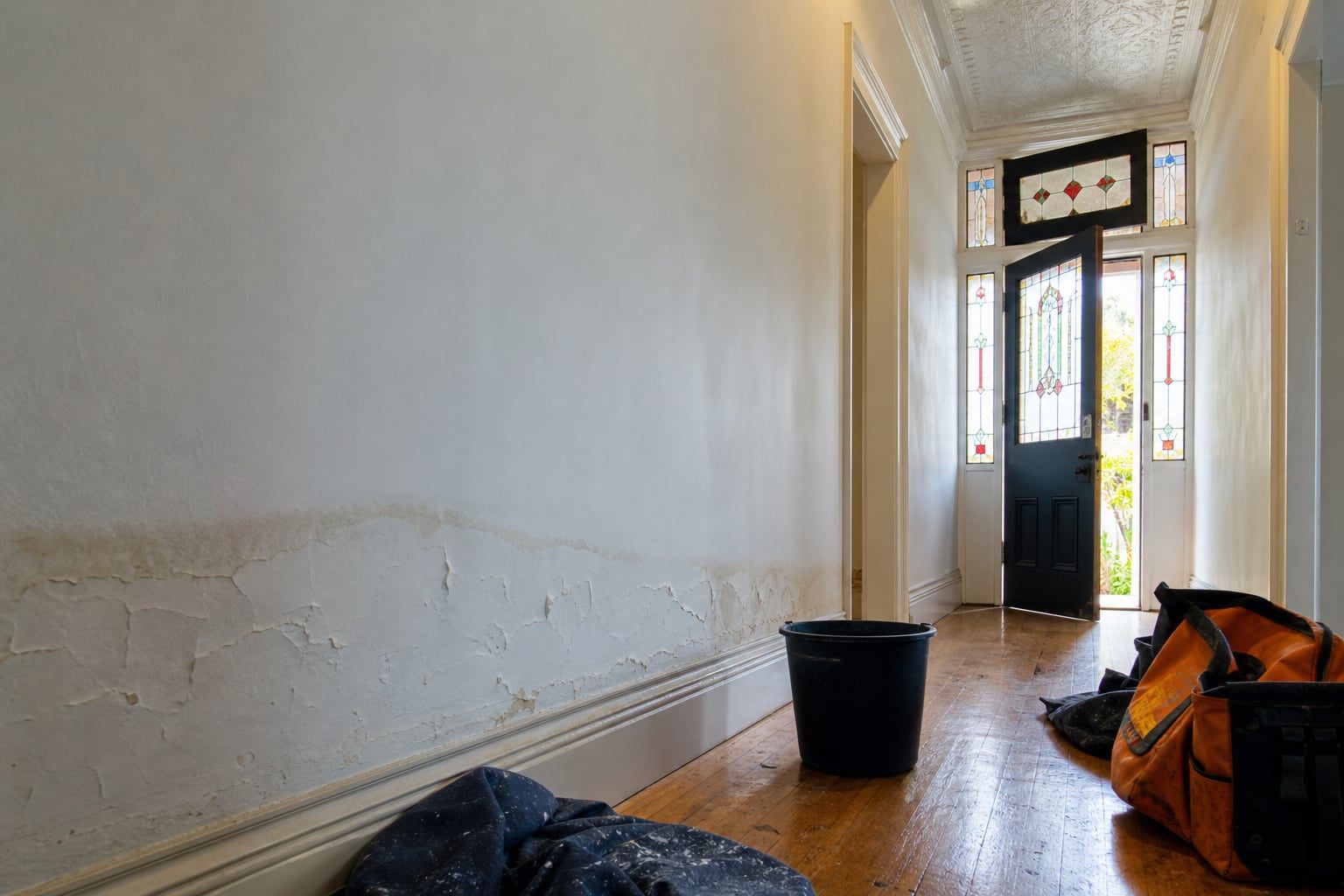
When ground water rises into a wall, it carries salts from the soil and the masonry. As the water evaporates out of the plaster, the salts are left behind and build up just below the surface. They crystallise, push the paint off, and leave a white fuzz or a brown stain. They also draw moisture from the air, so even after the source of the water is stopped, the old plaster stays damp on humid days.
That is why painting over it never lasts, and why every rising damp job we quote includes replacing the plaster. Without it, a new damp-proof course would leave you with a wall that looks no better.
How far the plaster comes off
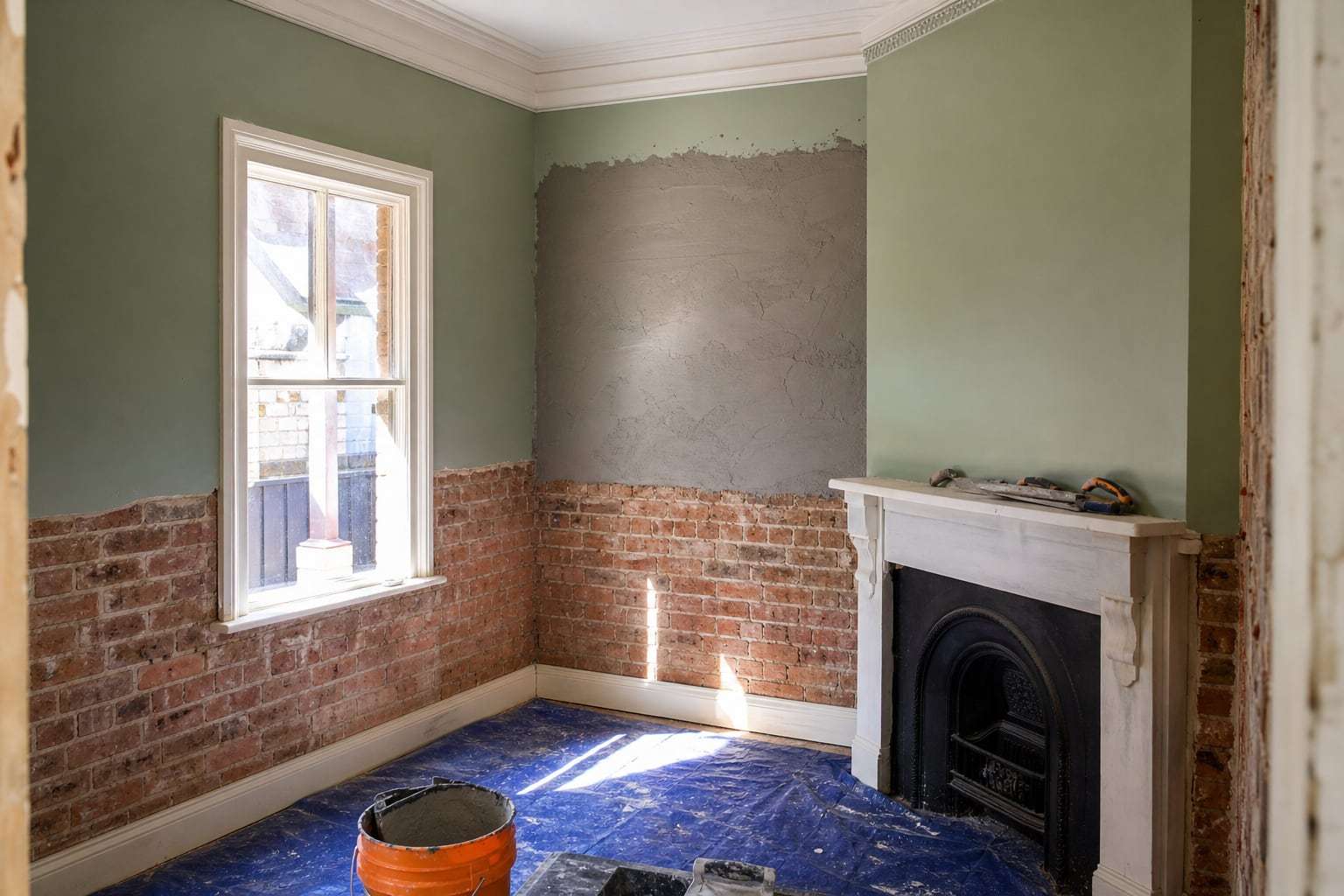
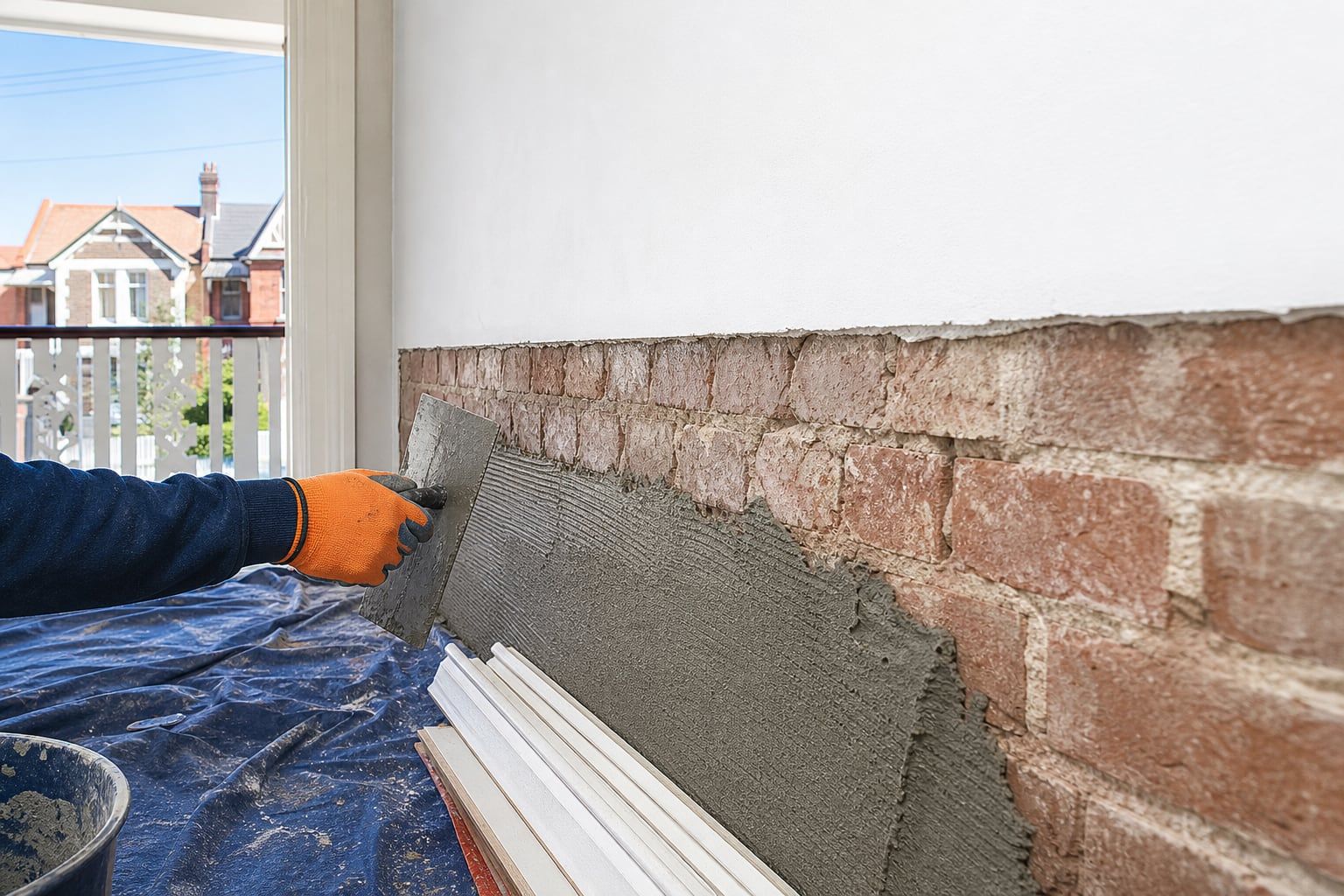
The stain on the wall is not the whole story. Salts often sit higher than the visible mark, and meter readings show where the plaster is still holding moisture. We take the plaster off to bare masonry to a line clear of the highest reading and salt test, usually in a straight line along the room so the new finish is easy to blend in.
Skirtings come off first and are kept for refitting where they are sound. Damaged or rotten skirtings can be matched with a new profile.
Drying time
A wall that has been wet for decades doesn’t dry overnight. Once a chemical damp course or physical damp course is in, the bare masonry is left to breathe for a period set by its thickness and readings. Rendering too early traps the water and the new plaster suffers. We give you the drying time in writing and come back when the wall is ready.
Salt-resistant, breathable render
The new render is a system made for walls that have been damp: it holds back any salt still in the masonry while letting the wall continue to dry. On older Inner West homes built with lime mortar, a lime-based or breathable system suits the wall better than hard cement render, which can drive moisture into the brick beside it. The finish coat is smoothed to match the wall above.
Painting afterwards
Once the finish has cured, the wall can be painted with a breathable masonry paint. Avoid acrylic or vinyl coatings that seal the surface, as they slow the drying and can bring the bubbling back.
Not every stain is salt
Mould spots, stains after rain and damp high on the wall usually have other causes. Our guide to damp walls after rain covers leaks and splashback, and the main rising damp treatment page explains how we test before quoting anything.
Cornices, skirtings and trims
Older rooms often have timber skirtings and decorative mouldings at the base of the wall. Sound timber is removed carefully, numbered and refitted after the render cures. Where skirtings have rotted from years of damp, we match the profile so the finished room looks original. Any architraves or built-in joinery that sit in the repair zone are noted on the quote, so there are no surprises on the day.
Updated
What good salt-damaged plaster repair looks like
Salt-Damaged Plaster Repair across the Inner West
Salt-Damaged Plaster Repair in the Inner West: step by step
- Find the salt lineReadings and salt tests show how high the contaminated plaster goes.
- Strip backPlaster is removed to bare masonry to a line above the highest salt.
- Let it dryThe wall is left open long enough to give up its water before rendering.
- Render and finishA salt-resistant render and a breathable finish coat go back on, ready for paint.
Salt-Damaged Plaster Repair guides for Inner West homeowners
- Rising damp or condensation: how to tell which one your house hasThe signs that separate water rising from the ground from water forming on cold surfaces, and why the fix is completely different.
- Rising damp in sandstone walls: why stone cottages need different treatmentWhy sandstone walls in early Inner West cottages take up ground water, the damage it does, and which repairs work on stone.
Salt-Damaged Plaster Repair questions in the Inner West
Something else on your mind? Call 0400 000 004 and ask.
Can't you just patch the bubbling paint?
Patching seals salt in. The salts keep drawing moisture into the plaster, and the paint bubbles again around the patch, usually within a season.
How high will the plaster come off?
Usually somewhere between 600 mm and a metre and a half, depending on where the readings and salt tests stop. We take it to a line above the highest contamination, not just above the stain.
What paint can go on the new render?
A breathable paint suited to masonry. Acrylic and vinyl paints that seal the surface stop the wall drying and should be avoided on these walls.