Rising damp in sandstone walls: why stone cottages need different treatment
Why sandstone walls in early Inner West cottages take up ground water, the damage it does, and which repairs work on stone.
Why sandstone homes get rising damp
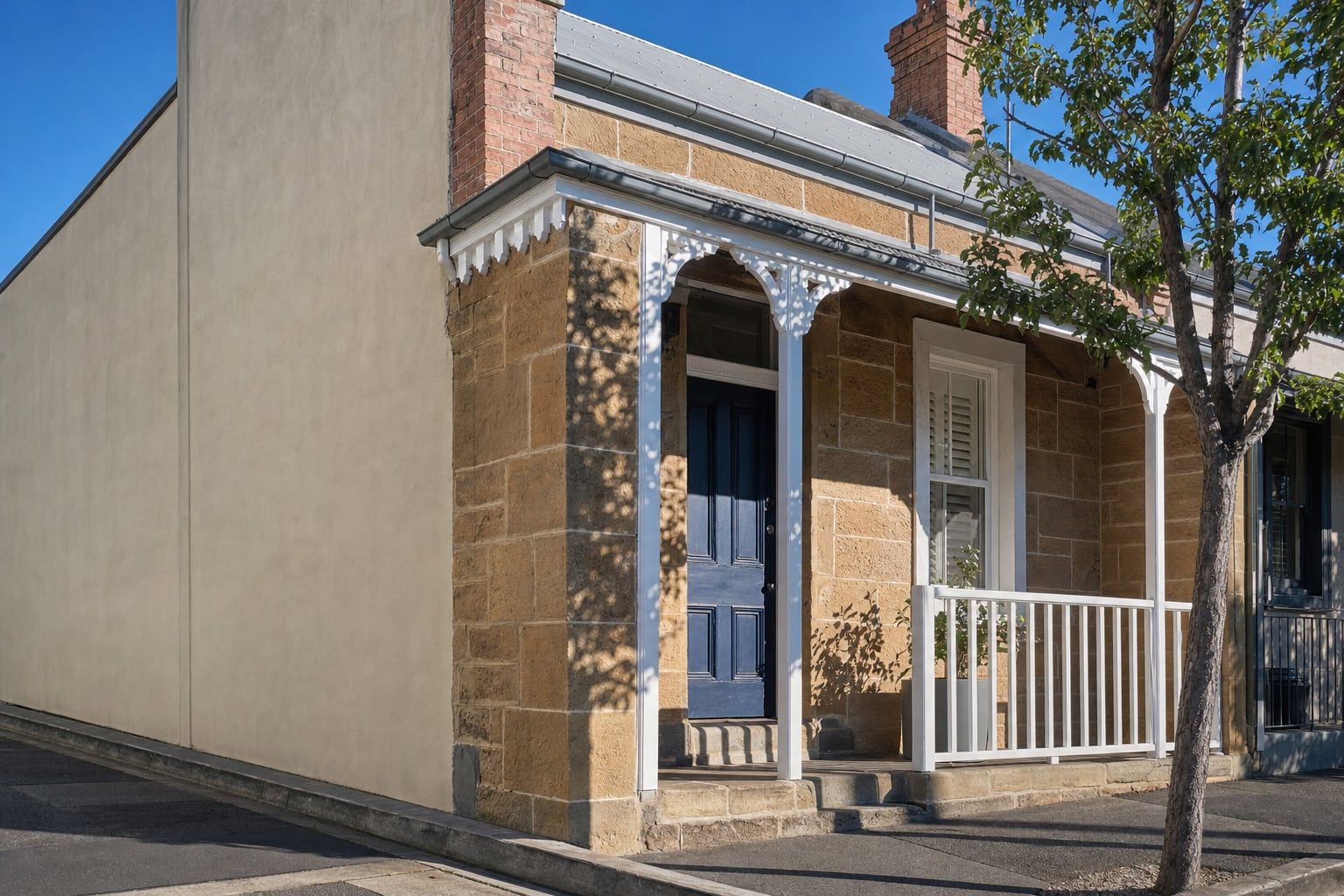
Some of the oldest houses in the Inner West, particularly in Balmain, Rozelle, Birchgrove, Annandale and Glebe, have walls of Sydney sandstone. Many were built in the middle of the nineteenth century as workers’ cottages, with stone quarried close by. They were built to last, and most have, but almost none were built with a damp-proof course that still works.
Sandstone is porous. It takes up water readily and lets it move through the stone. In a wall sitting on damp ground, water rises into the stone and the lime mortar around it, and the wall stays wet at the base. For a century or more that was manageable, because lime mortar and lime plaster let the water evaporate out of the wall. Problems have grown as houses were changed.
What has made it worse
Cement render and pointing
Through the twentieth century, many sandstone walls were repointed or rendered with cement. Cement is harder and far less breathable than the stone. Water that used to escape through the lime joints is trapped, and it moves through the stone instead, taking salt with it. The stone next to cement pointing often decays faster than the joint itself.
Raised ground
On the narrow lots of the peninsula suburbs, the ground beside the house has often been built up with paving, fill and garden beds. When the ground outside is higher than the base of the wall inside, water soaks into the stone above any original barrier.
Sealed interiors
Inside, original lime plaster has often been replaced with gypsum plaster and acrylic paint. These don’t cope with damp and salt, so the inside of the wall shows the problem quickly: bubbling paint, crumbling plaster and a salt band along the bottom of the room.
The signs on a sandstone wall
- stone near the base of the wall flaking, powdering or losing its surface, often called fretting
- white salt crystals on the stone or in the joints
- cement pointing standing proud while the stone around it wears back
- inside, a band of bubbling paint and soft plaster along the bottom of the walls
- a musty smell in rooms on the ground floor and a damp subfloor underneath
Why stone needs different treatment
Most rising damp treatments were designed with brick in mind. Brick walls have regular mortar beds a set distance apart, so an injected chemical can follow one joint and form a continuous line. Many sandstone walls are different.
Coursed or ashlar sandstone, cut into regular blocks with a continuous joint, can sometimes be injected like brick. The joint has to be sound and continuous, and the wall thickness has to be allowed for.
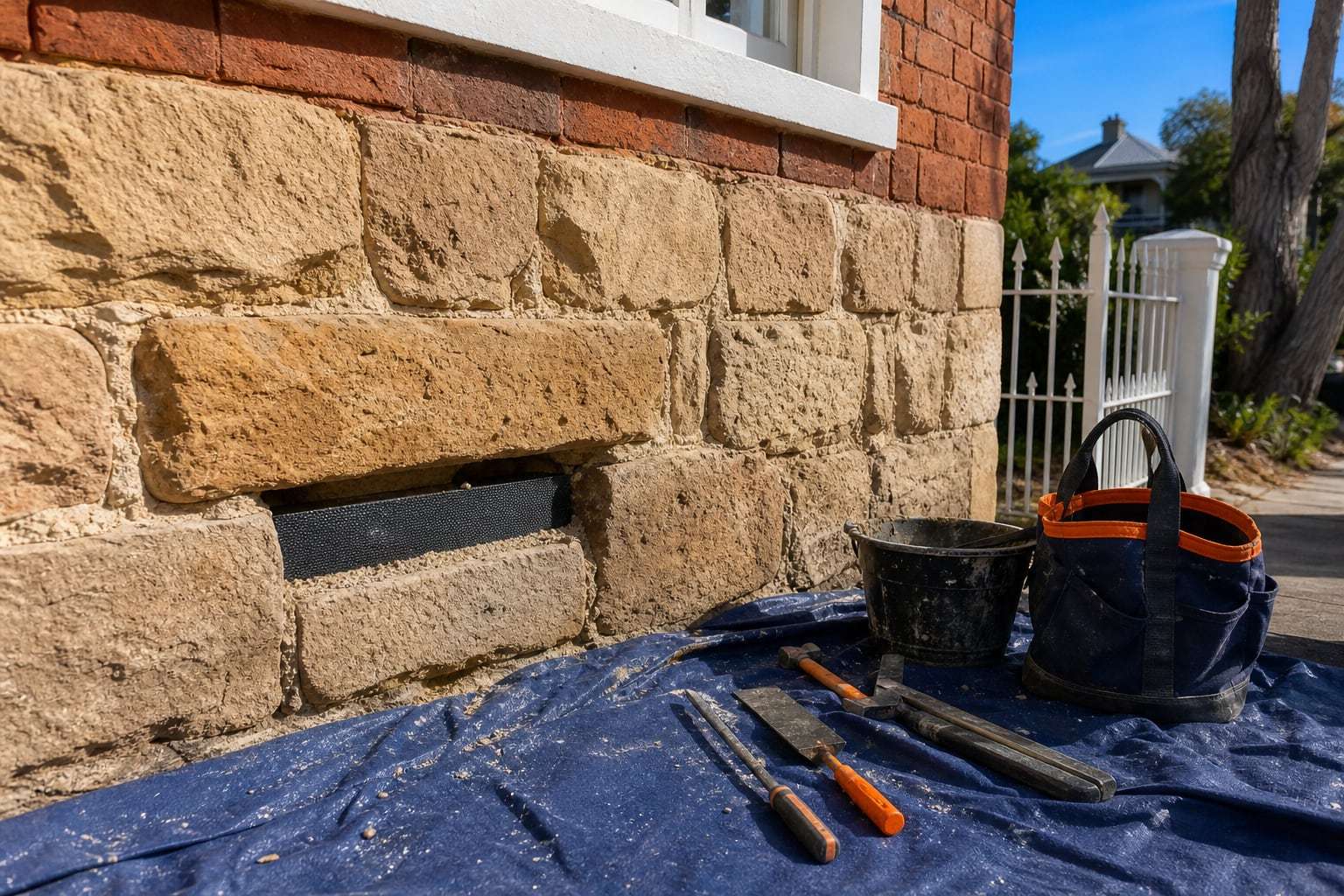
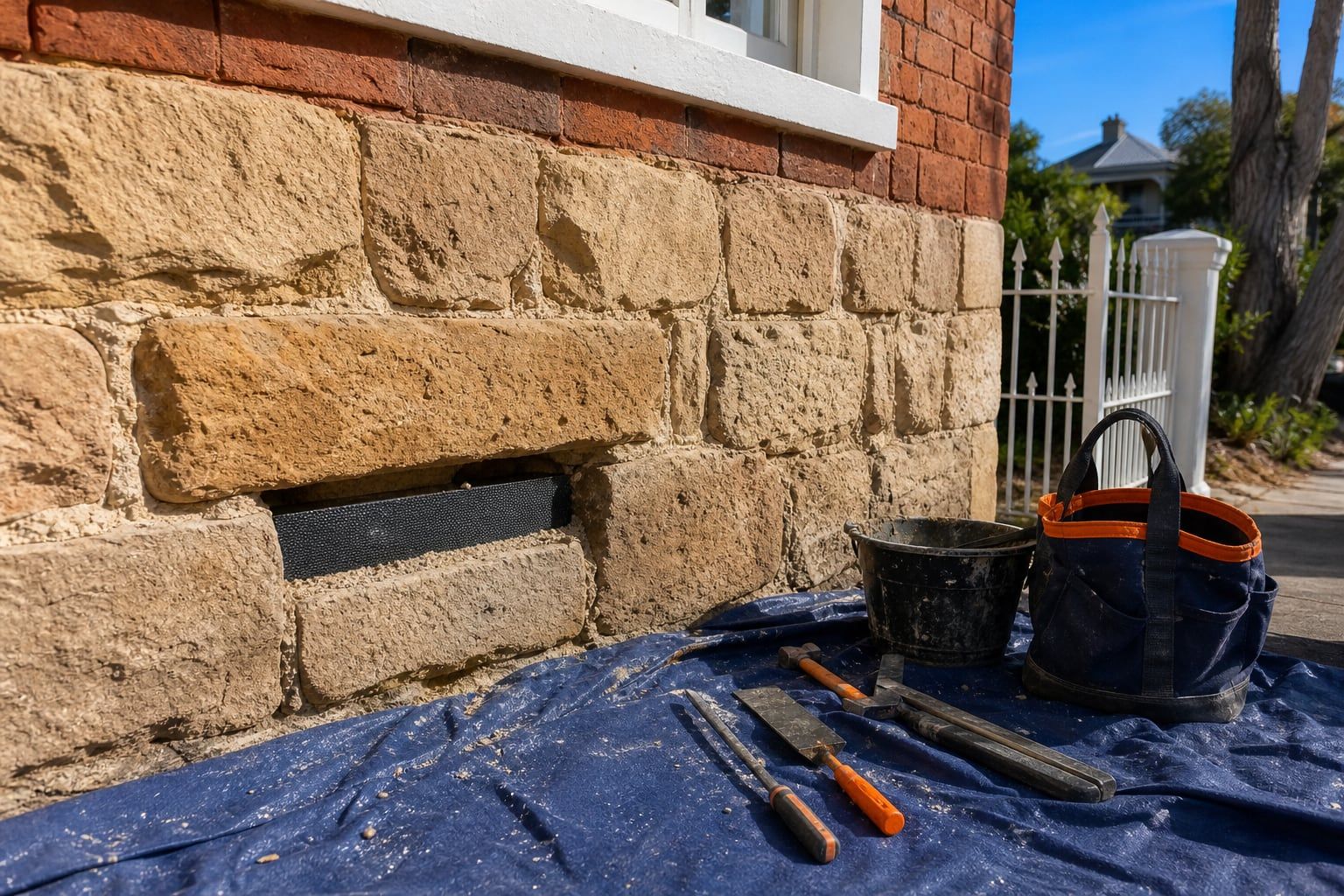
Rubble sandstone, built from irregular stones with a core of rubble and lime, rarely holds an injected line. The cream finds voids and runs away, leaving gaps. For these walls a physical damp course, set in short sections into a joint at the base of the wall, is the more reliable fix. In some walls, especially where a membrane can’t be fitted, managing the water with drainage and breathable finishes is the right approach.
Keep the wall breathing
Whatever stops the rising water, sandstone walls need to keep losing moisture through their surface and joints. That means:
- lime-based mortar for repointing, softer than the stone so the joint wears instead of the stone
- removing cement render and pointing where it’s trapping water, carefully so the stone isn’t damaged
- breathable plaster and paint inside, or a salt-resistant render designed for damp walls, as covered on our salt-damaged plaster repair page
- no sealers on the outside face of the stone
Fix the ground outside
On many stone cottages the cheapest and most effective step is outside. Lowering paving and garden beds below the base of the wall, regrading paths so they fall away, and connecting downpipes properly takes a lot of water away from the stone. Where a rear room is cut into the slope and the ground has to stay, waterproof tanking on the inside face, joined to the damp course, protects the room.
Heritage considerations
Many sandstone cottages sit within heritage conservation areas, and some are individually listed. Internal damp proofing and like-for-like repairs to mortar and plaster usually sit comfortably with heritage controls, but changes to the street face, new openings or replacement of original fabric may need council approval. Choosing methods that keep the original stone and use matching lime materials is better for the house and easier to approve.
What a sandstone damp check covers
We look at the type of stone wall and the condition of the joints, read the moisture at several heights inside, test the plaster for salts, look at the ground and drainage outside, and check the subfloor. Then we recommend the approach that suits that wall, and explain why in the written quote.
If you’re not sure the damp is rising at all, our guide on damp walls after rain explains how leaks and splashback differ. For the broader picture of how we work across the area, see our page on Inner West rising damp treatment.
Updated
Rising damp in sandstone walls: common questions
Something else on your mind? Call 0400 000 004 and ask.
Can a sandstone wall be injected?
Coursed sandstone with a continuous mortar bed sometimes can. Rubble stone with irregular joints and voids usually can't hold a continuous injected line, so a physical course or drainage is more reliable.
Why is my sandstone crumbling at the bottom of the wall?
Salt carried up by ground water crystallises in the stone near the surface and breaks off thin layers. It is worst where cement render or pointing has stopped the stone drying through the mortar joints.
Should sandstone walls be rendered?
If they are rendered, the render needs to be breathable, usually lime-based. Hard cement render traps water in the stone and speeds up decay.
Physical Damp Course in the Inner West
More guides for Inner West homeowners
- Rising damp or condensation: how to tell which one your house hasThe signs that separate water rising from the ground from water forming on cold surfaces, and why the fix is completely different.
- Damp walls after rain: when wet walls aren't rising dampThe leaks, splashback and drainage problems that make walls wet after rain, how they differ from rising damp, and how each is fixed.