Rising damp or condensation: how to tell which one your house has
The signs that separate water rising from the ground from water forming on cold surfaces, and why the fix is completely different.
Two very different kinds of damp
Damp in a house comes from one of three places: water rising from the ground, water getting in from outside, or water vapour already in the air inside that turns back into water on a cold surface. The first is rising damp, the third is condensation, and they are the two most often confused. They can look alike at a glance, with stained paint, mould and a musty smell, but the fix for one does nothing for the other.
Older Inner West houses are prone to both. Brick and sandstone walls built before modern damp courses can draw water up from the ground. Many of the same houses have single-glazed windows, little insulation and bathrooms and kitchens with weak exhaust, so warm moist air finds cold surfaces to settle on. Getting the diagnosis right saves spending money on the wrong thing.
Where the damp sits on the wall
The single most useful sign is height.
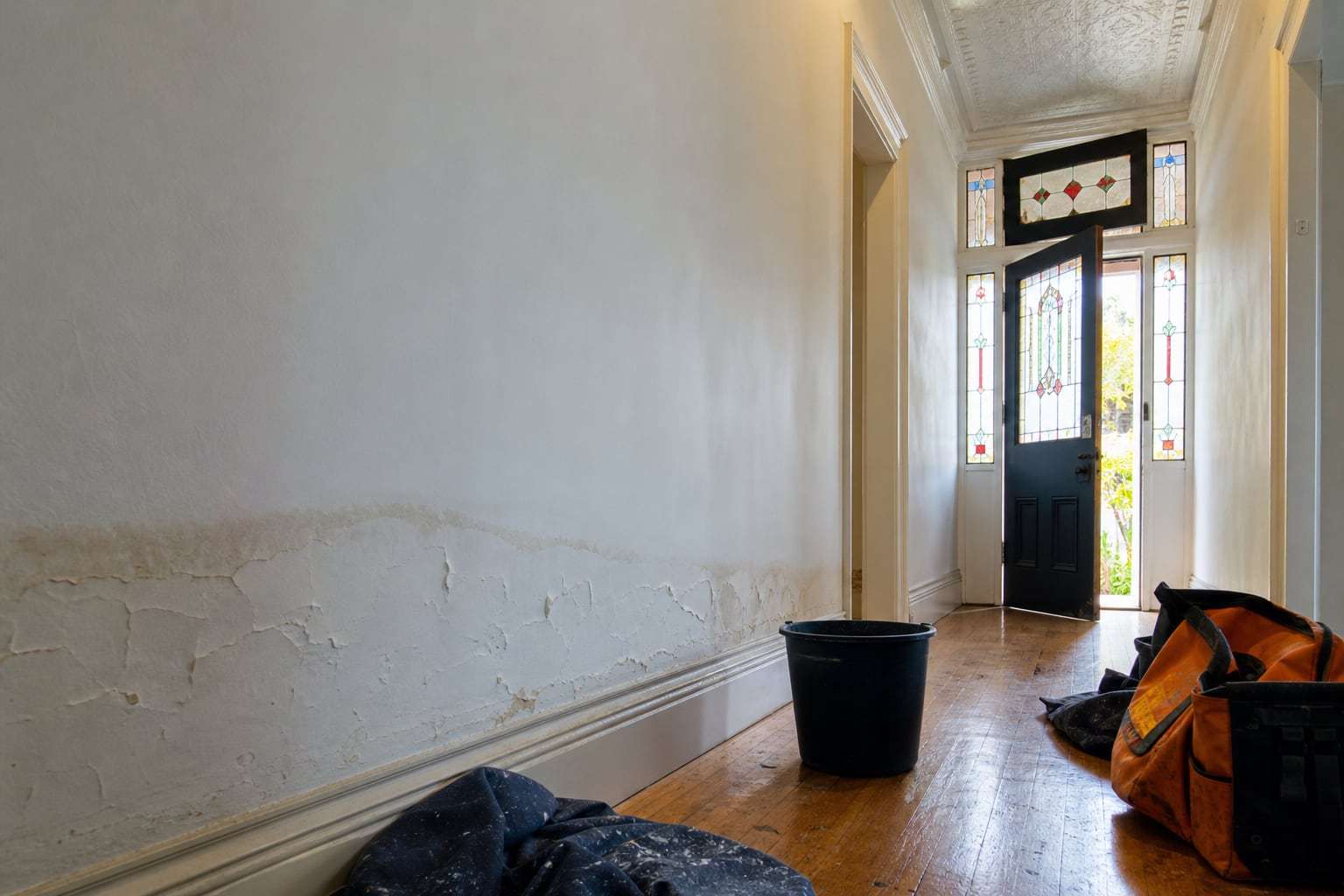
Rising damp starts at the floor and works up. It is worst at skirting level, fades with height and usually stops somewhere below about a metre, often with a brown or white line marking the top. It affects ground-floor walls, and particularly walls that touch the ground on the other side, such as external walls and walls over a damp subfloor.
Condensation shows up where surfaces are coldest and air is still. That means behind furniture against outside walls, in wardrobe corners, around window frames, on ceilings above showers, and high in the corners of rooms where the wall meets the ceiling. It can be on any floor of the house, including upstairs, where rising damp can’t reach.
If the damp is high on the wall, on a ceiling or upstairs, it is very unlikely to be rising damp.
When it is worst
Rising damp is there in every season. It may get a little worse after a wet spell when the ground is saturated, but it doesn’t disappear in a dry summer.
Condensation follows the weather and how the house is used. It is worst in cooler months, on cold mornings, after showers and cooking, and in rooms where people sleep with the windows closed. In summer it often vanishes.
What the damage looks like
Rising damp leaves salt. As water rises and evaporates from the plaster, it leaves salts behind that break the paint, fluff up as white crystals and stain the wall brown. Plaster near the floor becomes soft and crumbly, skirtings can rot, and paint bubbles and flakes in a band along the bottom of the wall.
Condensation leaves mould. Black spotty mould grows on the surfaces where water forms, often in patches with a clear edge where the cold spot ends. Water droplets run down windows and pool on sills. Paint can peel, but there is no salt band and the plaster is usually sound underneath.
The simple tests you can do
- Look at the pattern. A band along the bottom of ground-floor walls points to rising damp. Patches high up, in corners and on ceilings point to condensation.
- Wipe the surface. Condensation is water on the surface and wipes off. Rising damp is inside the wall and doesn’t.
- Check the season. If it clears up every summer, condensation is the likely cause.
- Look outside. Garden beds, paths or soil piled higher than the floor inside, or a downpipe emptying against the wall, often go with rising damp.
- Look underneath. A damp, still subfloor with blocked vents adds to both problems.
Why a moisture meter can mislead
Handheld meters read the surface, and salt in plaster makes them read high even when the wall behind is drying. That is why a single reading proves little. We take readings at several heights on each wall, compare walls with the outside conditions, and test the plaster for salts. A wall that reads wettest at the bottom and has salt in the plaster is rising damp. A wall that reads damp only on the surface in cold spots, with no salts, is condensation.
Fixing rising damp
Rising damp is fixed at the base of the wall. A new damp-proof course stops water rising, drainage keeps ground water away, and the salty plaster is replaced so the wall can stay dry. Our page on rising damp treatment explains how we choose between injected and membrane courses, and salt-damaged plaster repair covers the finishing work.
Fixing condensation
Condensation is fixed by reducing the moisture in the air and warming the cold surfaces. That means exhaust fans in bathrooms and kitchens vented outside, opening windows when you can, not drying washing indoors, keeping furniture slightly off outside walls, and insulating where possible. Mould should be cleaned with a suitable treatment rather than painted over.
When it is both
In many older houses the two go together. A wet subfloor and walls drawing water from the ground release moisture into the house, which then condenses on cold surfaces. Getting air moving under the floor with subfloor ventilation, and stopping the rising damp, often reduces the condensation inside as well.
Get it checked properly
If you’re not sure which you have, a proper moisture check settles it. We look at the walls, the outside of the house and the subfloor, and tell you on the day what is causing the damp. If it turns out to be condensation, we will say so, and explain what will help. Our team covers the whole area, and our page on Inner West rising damp explains how the free check works.
If the damp seems to come and go with the weather rather than the seasons, read our guide to damp walls after rain, which covers leaks and splashback that can look like rising damp.
Updated
Rising damp or condensation: common questions
Something else on your mind? Call 0400 000 004 and ask.
Can a house have both rising damp and condensation?
Yes, and older houses often do. A wet subfloor and damp walls add moisture to the air inside, which then condenses on cold windows and ceilings. Fixing the rising damp and airflow usually reduces the condensation too.
Does a dehumidifier fix rising damp?
No. It takes moisture out of the air, which helps with condensation, but the wall keeps drawing water from the ground. It can make the wall surface look drier for a while without changing the cause.
Which is worse for the house?
Rising damp does more damage to the building over time, because it carries salt into the plaster and keeps timbers at the base of the wall wet. Condensation is mostly a health and comfort problem, but mould needs treating either way.
Rising Damp Treatment in the Inner West
More guides for Inner West homeowners
- Damp walls after rain: when wet walls aren't rising dampThe leaks, splashback and drainage problems that make walls wet after rain, how they differ from rising damp, and how each is fixed.
- Rising damp in sandstone walls: why stone cottages need different treatmentWhy sandstone walls in early Inner West cottages take up ground water, the damage it does, and which repairs work on stone.