Rising damp symptoms: the signs to look for in Inner West homes
What each sign of damp looks like, what usually causes it, and when it points to rising damp.
Spotting rising damp in Inner West homes
Rising damp rarely announces itself all at once. It starts with a scuffed-looking band of paint behind the couch, a skirting board that feels cold, or a room that smells stale after it has been shut up. Because so many Inner West houses have solid brick and sandstone walls on old footings, these signs are common, and most homeowners notice one or two before they think of damp at all.
Each symptom below explains what it looks like, what usually causes it, and whether it points to rising damp or something else. If you’re seeing several of them together, especially low on ground-floor walls, a moisture check will confirm the cause.
Tide marks
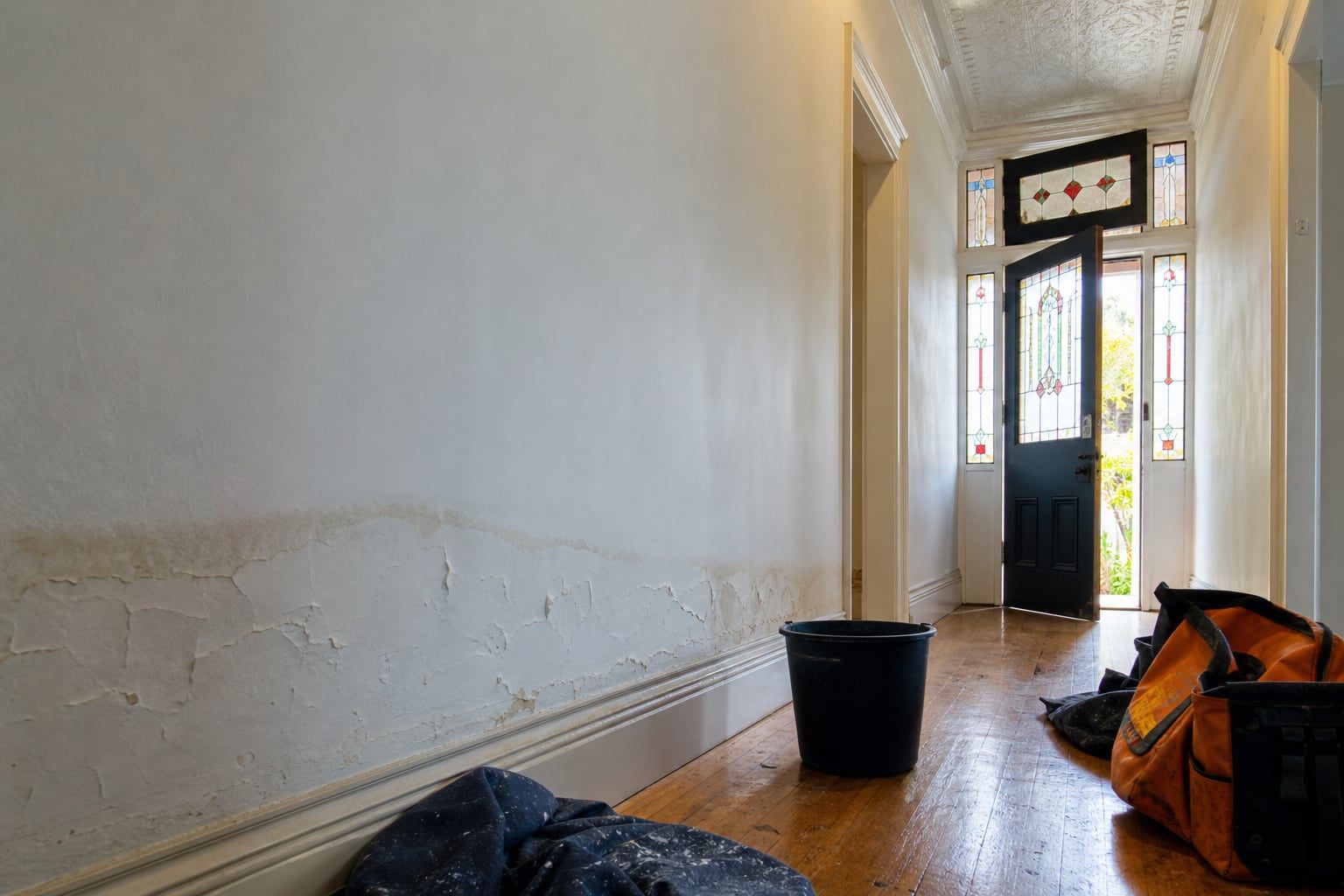
A tide mark is a brown, yellow or white line running along a wall, usually somewhere between 300 mm and a metre above the floor. Below the line, the paint or plaster is often darker, stained or blistered.
It forms where water rising up the wall evaporates and leaves salts and staining behind. A fairly level line along the bottom of a ground-floor wall is one of the clearest signs of rising damp. A patchy mark higher up, or one that only appears after rain, usually points to a leak instead.
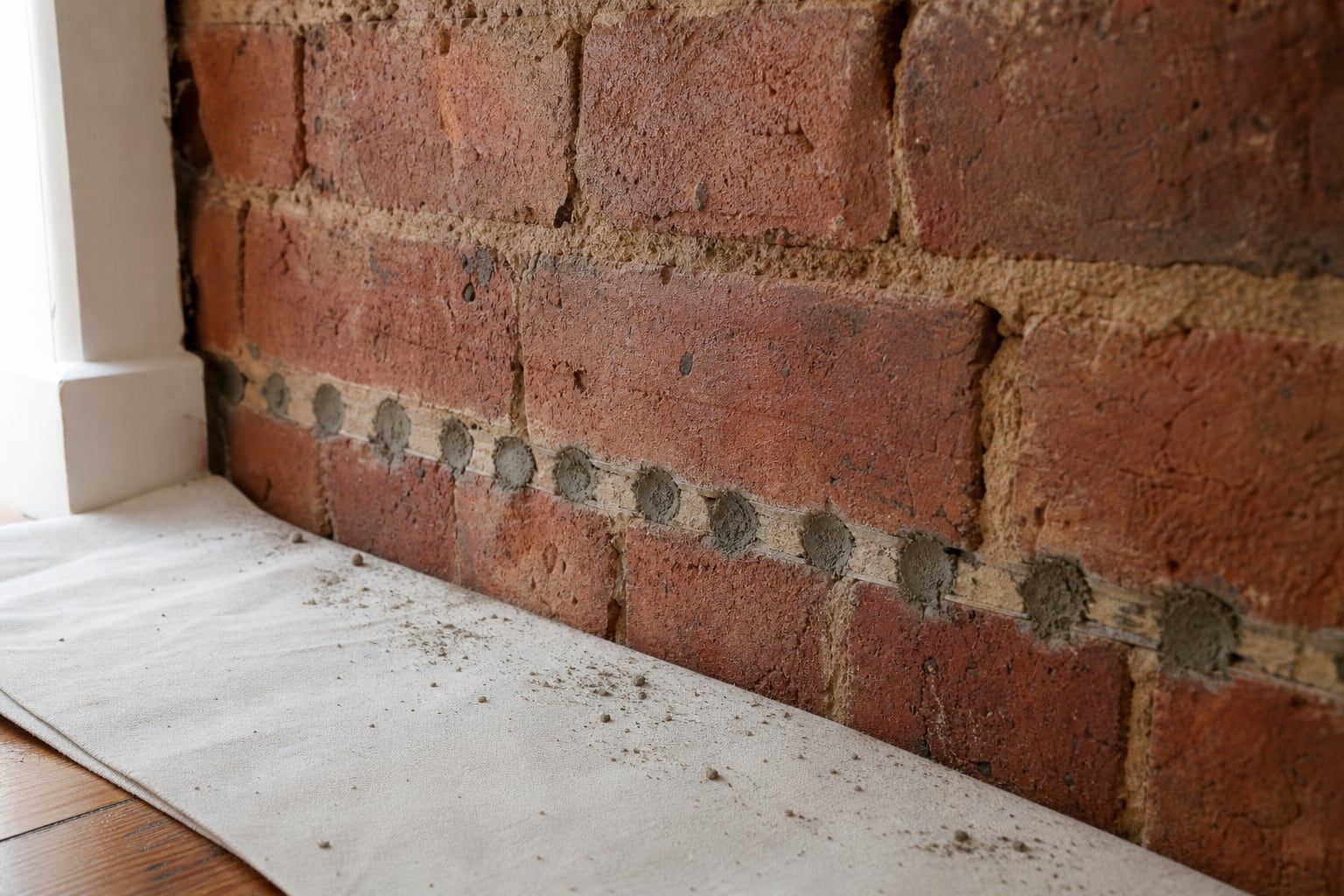
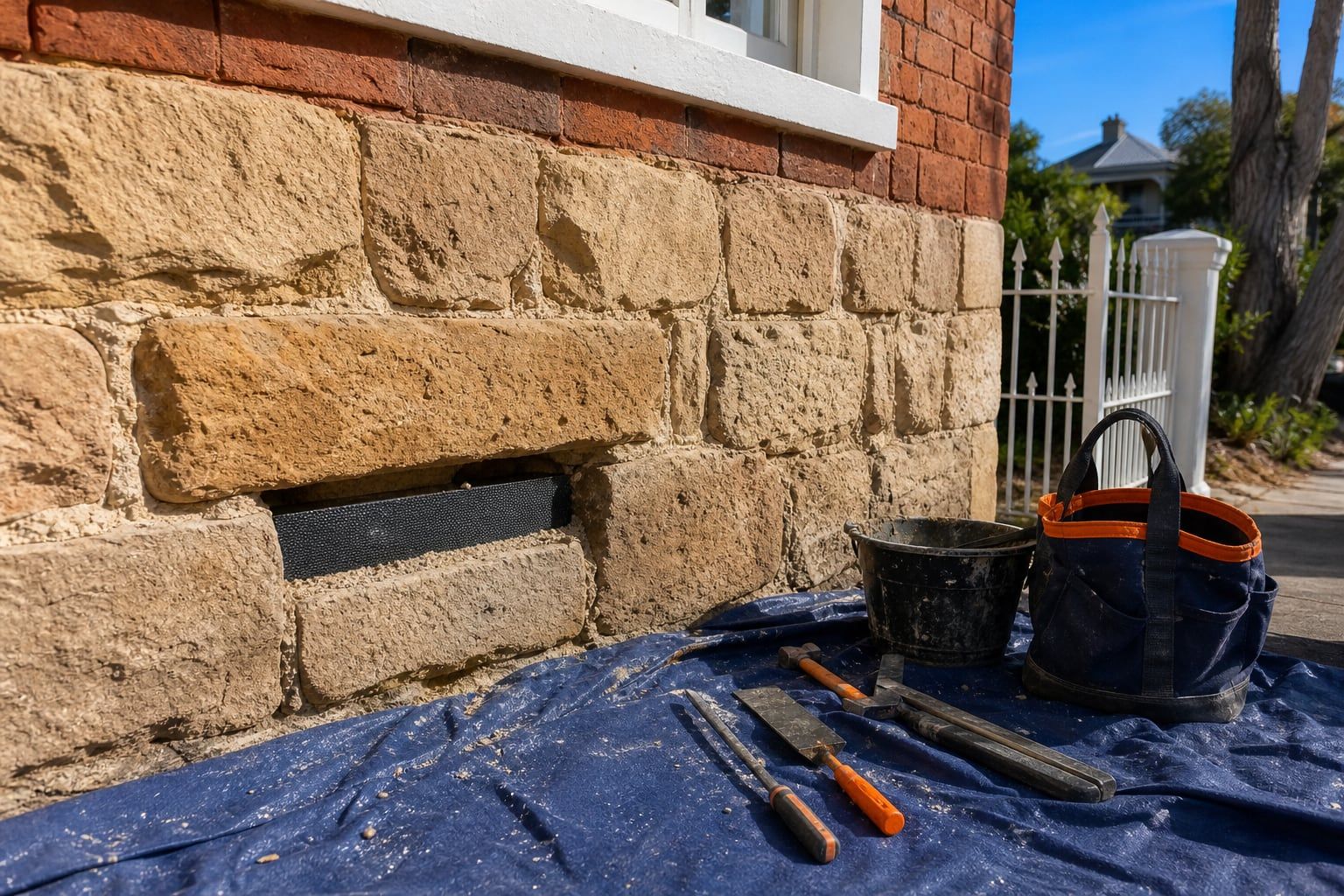
What fixes it: a new damp-proof course to stop the water, then replacing the stained plaster. See rising damp treatment.
Bubbling and flaking paint
Paint that blisters, bubbles or lifts off in flakes along the bottom of a wall is usually being pushed off from behind. Moisture and salt build up between the plaster and the paint, and the paint loses its grip. Acrylic paint, which seals the surface, tends to fail fastest.
If the damage is in a band near the floor, rising damp is the likely cause. Bubbling around a window or high on the wall points to a leak or condensation.
What fixes it: stopping the water, then salt-damaged plaster repair so the new paint has a sound, salt-free surface.
Salt deposits
White, fluffy or crystalline deposits on plaster, brick or mortar are salts brought up from the ground and the masonry by rising water. As the water evaporates, the salt is left behind on the surface. It may brush off, but it keeps coming back.
Salt is one of the strongest signs that water has been rising through a wall for a long time. It also keeps the wall damp, because salt draws moisture from the air on humid days.
What fixes it: a damp-proof course and replacing the salt-loaded plaster with a salt-resistant render. Brushing or washing salt off only treats the surface.
Crumbling plaster
Plaster near the floor that feels soft, sounds hollow when tapped, or crumbles into powder has usually been damaged by salt crystallising inside it. Gypsum plasters and modern patches fail quickly once they’re wet. On older walls, original lime plaster may survive longer but still breaks down.
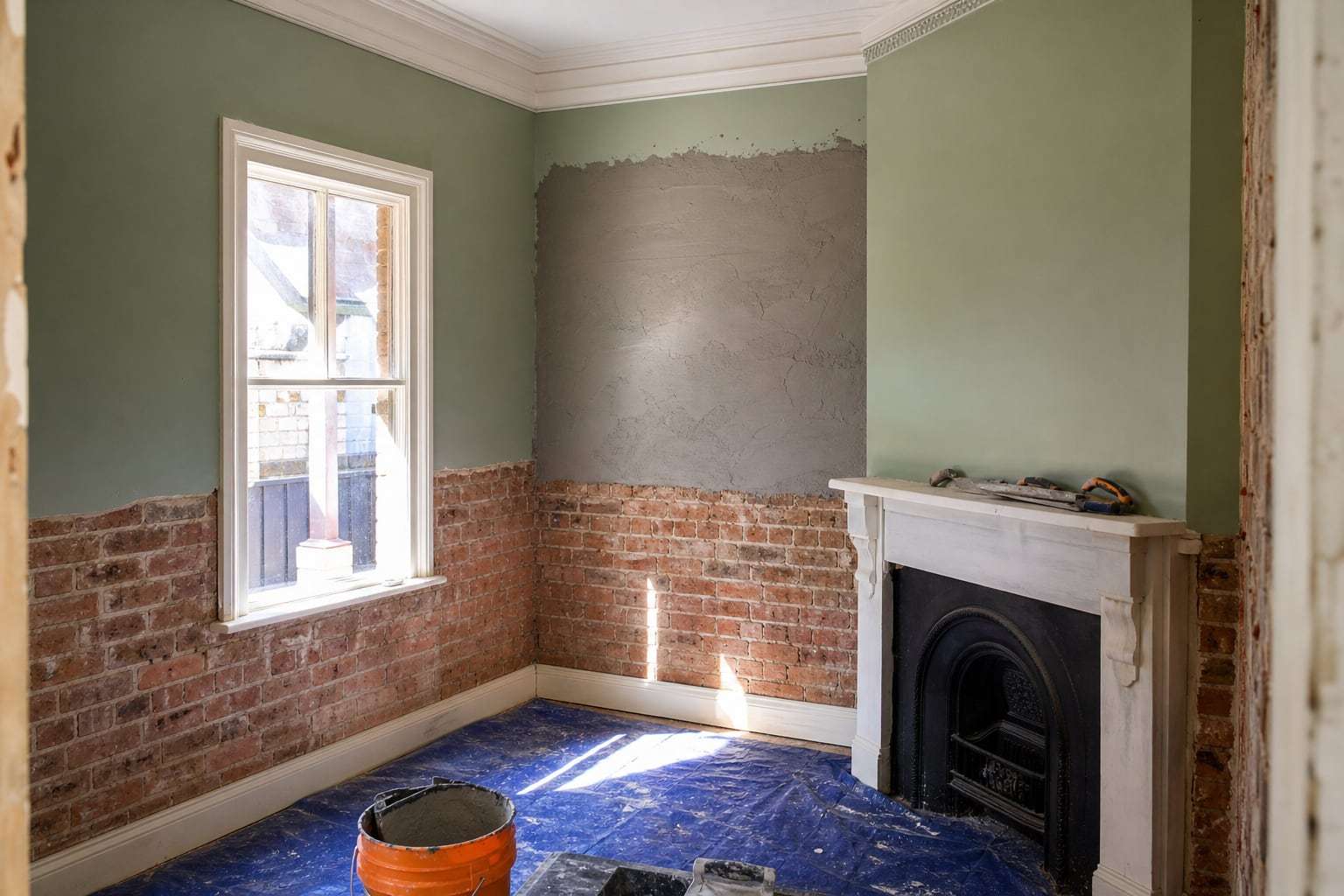
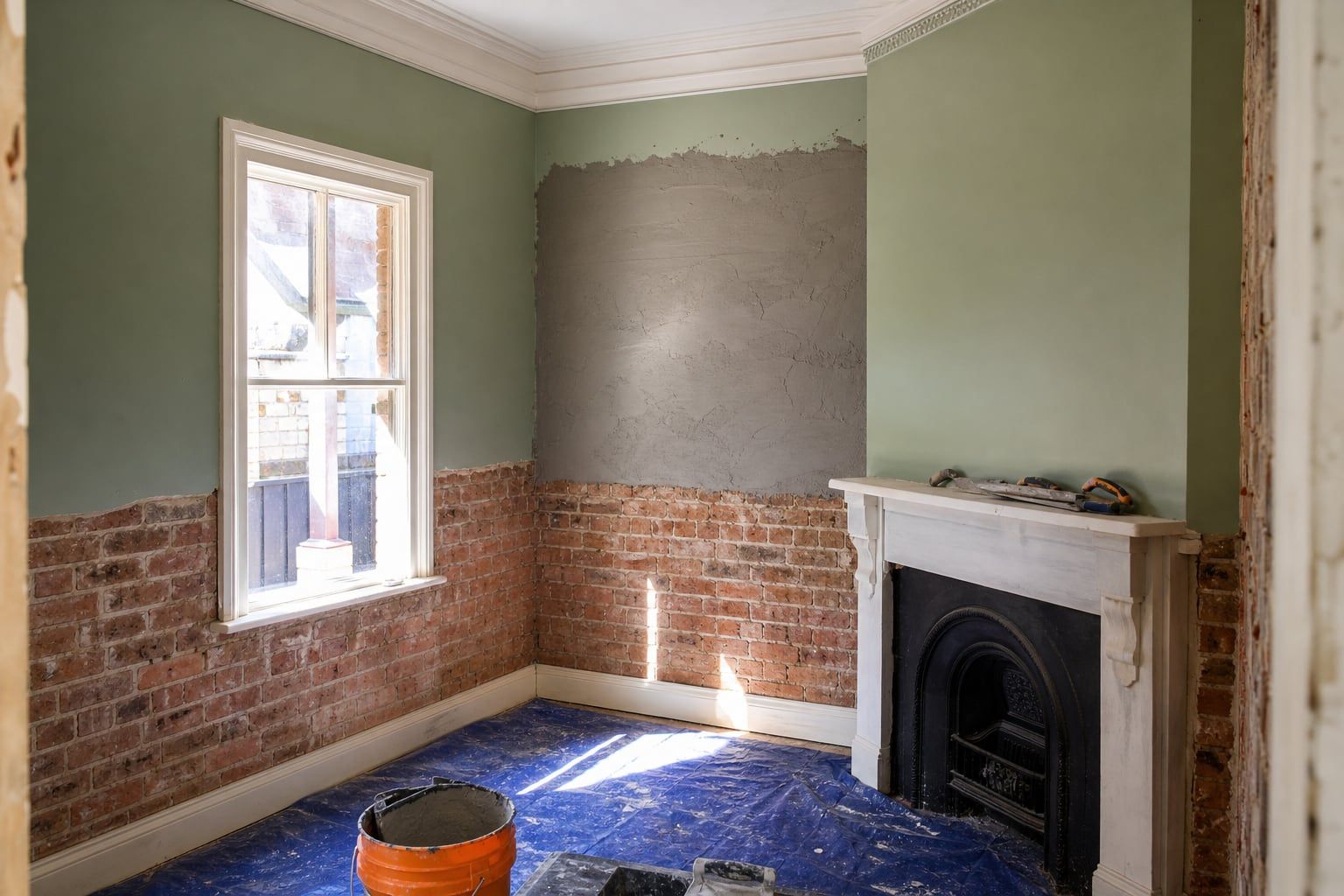
What fixes it: removing the damaged plaster to bare masonry above the salt line and re-rendering once the wall has dried. On brick walls a chemical damp course usually goes in first.
Mould low on the walls
Black or grey mould growing low on walls, behind furniture or along skirtings needs moisture to live. When it is concentrated at the bottom of ground-floor walls, the moisture is often coming up from the ground. When it is high in corners, on ceilings or around windows, condensation is the more likely cause.
What fixes it: cleaning the mould properly and fixing the moisture source. Painting over mould without fixing the damp brings it back.
A musty smell
A stale, earthy smell in ground-floor rooms, especially after the house has been shut up, often comes from damp masonry, wet timber and a still, damp subfloor. It’s often the first sign people notice, sometimes before any staining shows.
What fixes it: finding where the moisture is. Often it’s a mix of rising damp in the walls and poor airflow under the floor, fixed with a damp course and subfloor ventilation.
Rotting skirting boards
Timber skirtings sit right where rising damp is wettest. Skirtings that are soft, swollen, stained black at the bottom or pulling away from the wall have usually been absorbing moisture from the plaster and brick behind them for years.
What fixes it: a damp-proof course, new plaster, and replacing rotten timber with a matching profile. Sound skirtings can be removed and refitted.
A damp subfloor
Under a timber floor, signs of trouble include damp or muddy soil, white fungal growth, soft or stained bearers and joists, and a strong musty smell when the floor is lifted. Blocked or missing vents are usually part of the problem.
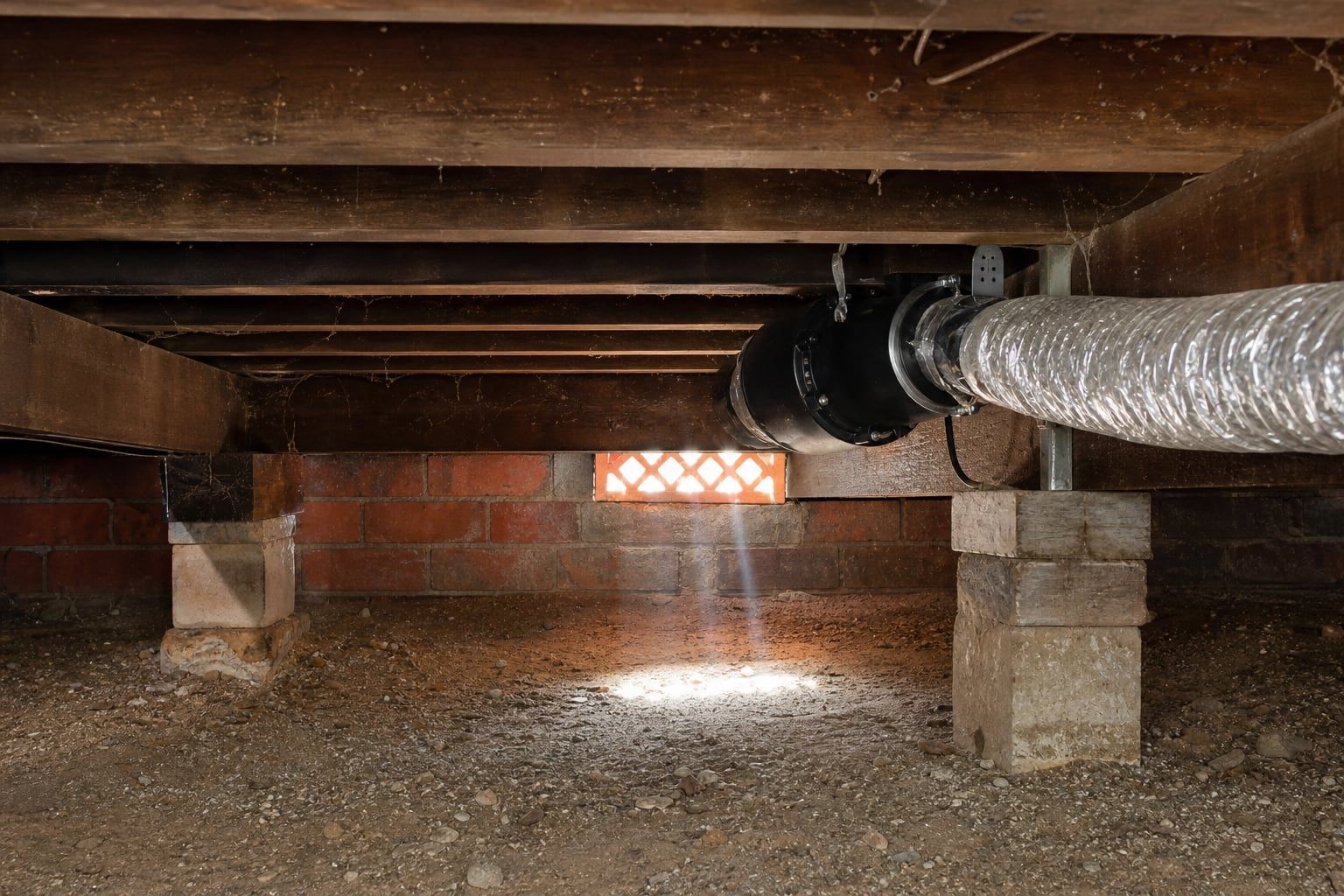
What fixes it: clearing and adding vents, fans where passive airflow can’t reach, and drainage if water is getting in. See subfloor ventilation.
Condensation on windows and ceilings
Water droplets on windows, damp patches on ceilings and mould in high corners are signs of condensation, not rising damp. They come from moist air inside the house meeting cold surfaces, and they’re worst in cooler months.
It’s worth knowing the difference, because the fix is ventilation and heating inside, not a damp-proof course. Our guide to rising damp or condensation explains how to tell them apart.
When the symptoms point to rising damp
The pattern matters more than any single sign. Rising damp is worst at the bottom of ground-floor walls, present all year, and comes with salt in the plaster. Damp that comes and goes with storms is usually water from outside, covered in our guide to damp walls after rain.
If you’re seeing several of these rising damp symptoms together, book a free moisture check. We’ll read the walls, look outside and under the floor, and tell you what’s causing it before anything is quoted. Our overview of Inner West rising damp explains how the visit works.
Updated
What fixes these symptoms in the Inner West
More on damp for Inner West homeowners
- Rising damp or condensation: how to tell which one your house hasThe signs that separate water rising from the ground from water forming on cold surfaces, and why the fix is completely different.
- Damp walls after rain: when wet walls aren't rising dampThe leaks, splashback and drainage problems that make walls wet after rain, how they differ from rising damp, and how each is fixed.
- Rising damp in sandstone walls: why stone cottages need different treatmentWhy sandstone walls in early Inner West cottages take up ground water, the damage it does, and which repairs work on stone.
Questions about rising damp symptoms
Something else on your mind? Call 0400 000 004 and ask.
Which symptom is the surest sign of rising damp?
A band of damage along the bottom of ground-floor walls, wettest at skirting height and fading out below about a metre, with salt in the plaster. One symptom on its own can have other causes; that pattern rarely does.
Can I have rising damp with no visible signs?
In the early stages, or behind cupboards and furniture, yes. A musty smell or damp, cold skirtings are often the first clue before paint starts to fail.
Should I fix the symptoms first?
No. Repainting, patching or cleaning mould before the cause is fixed means doing it again within months. Find the source first, then repair the finishes.